Tuesday, May 09, 2006

Three Iraqs Would Be One Big Problem

By ANTHONY H. CORDESMAN
Published: May 9, 2006
Washington
Skip to next paragraph
Readers’ Opinions
Forum: The Transition in Iraq

SOME pundits and politicians have been floating the idea that America consider dividing Iraq into three ethno-religious entities, saying this would not only stem the insurgency but also allow our troops an earlier exit. They are wrong: fracturing the country would not serve either Iraqi or United States interests, and would make life for average Iraqis even worse.
The first problem is that Iraq does not have a neat set of ethnic dividing lines. There has never been a meaningful census of Iraq showing exactly how its Arab Sunnis, Arab Shiites, Kurds and other factions are divided or where they live. The two elections held since the toppling of Saddam Hussein have made it clear, however, that Iraq's cities and 18 governorates all have significant minorities.
Thus any effort to divide the country along sectarian and ethnic lines would require widespread "relocations." This would probably be violent and impoverish those forced to move, leave a legacy of fear and hatred, and further delay Iraq's political and economic recovery.
Moreover, Iraq is heavily urbanized, with nearly 40 percent of the population in the multiethnic greater Baghdad and Mosul areas. We have seen in Northern Ireland and the Balkans how difficult it is to split cities, and with Iraq's centralized and failing services and impoverished economy, violence and economics cannot be separated. Deciding where Kirkuk, a key oil city, belonged would pit the Kurds against all the rest of Iraq's factions. Basra, the nation's port, is already under the sway of Shiite Islamist militias and could lose all of its secular character if the nation divided. In addition, the nation could not be partitioned without dividing the army, the security forces and the police. The regular military is largely Shiite with a significant number of Kurds. The Ministry of Interior forces are largely Shiite, and the police are hopelessly mixed with militias and local security forces that split according to local tribal, sectarian and ethnic ties. Dividing the country essentially means dividing the army and security forces and strengthening the militias — all of which would lead to more violence.
And of course, there is no way to divide Iraqi that will not set off fights over control of oil. More than 90 percent of Iraq's government revenues come from oil exports. The Sunni Arab west has no developed oil fields and thus would have no oil revenues. The Kurds want the northern oil fields, but have no legitimate claim to them and no real way to export the oil they produce (their neighbors Iran, Syria and Turkey have restive Kurdish populations of their own and thus no interest in helping Iraq's Kurds achieve self-sustaining freedom). Control of Basra would also be an issue, with various Shiite groups looking to separate and take control of the oil in the south.
Dividing Iraq would also harm regional stability and the war on terrorists. Sunni Islamist extremist groups with ties to Al Qaeda already dominate the Sunni insurgents, and division would only increase their hold over average Iraqis. And with Iraqi Sunnis cut out of oil money, Arab Sunni states like Egypt and Saudi Arabia would be forced to support them, if only to avoid having the Islamist extremists take over this part of Iraq.
Iran, of course, would compete for the Iraqi Shiites. The Kurds have no friends: Turkey, Iran and Syria would seek to destabilize the north and exploit the divisions between the two main Kurdish political unions. In the end, these divisions could spill over into the rest of the Middle East and the Arab world, creating a risk of local conflicts and the kind of religious tension that feeds Islamist extremism.
Washington has made serious mistakes in Iraq, and they may lead to civil war. Dividing Iraq, however, is virtually certain to make things worse. It would convey the message that America has been defeated and abandoned a nation and a people. Even if one could overlook the fact the United States effectively broke Iraq and has a responsibility to its 28 million people, it is impossible to deny that leaving behind a power vacuum in an already dangerous region is hardly a viable strategy.
Anthony H. Cordesman, a senior fellow at the Center for Strategic and International Studies, is the author of "The Iraq War: Strategy, Tactics and Military Lessons."
Next Article in Opinion (3 of 9) »

Thursday, May 04, 2006

Election Results Fail To Reflect The Realities, Ergec


ANKARA -
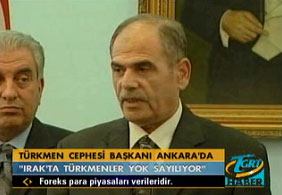
''Elections results in Iraq fail to reflect the realities. A large Kurdish population was transferred to Kirkuk, which is an oil-rich city,'' Iraqi Turkmen Front (ITF) Chairman Sadettin Ergec who is visiting Turkey reaffirmed on Thursday.
In an exclusive interview with the A.A. correspondent, Ergec said they arrived in Turkey to get ''moral support''.
Stating that Turkmens were living under tough conditions, Ergec said ''countries neighboring Iraq have an important role to resolve the problems of Iraq since problems may spread to those countries''.
Ergec defended that relations (between Turkmens in Iraq and Turks) recessed after the rejection (by Turkish parliament) of the motion (allowing US troops to enter northern Iraq through Turkish territory --on the eve of Iraq war). -ELECTION RESULTS-
''I think it will be wrong to make assessments based on the results of recent elections since they fail to reflect the facts. On the other hand we expect Turkey to assume a more active role in the future,'' he noted.
Pertaining to the situation in Kirkuk, Ergec reaffirmed a very large Kurdish population was transferred to Kirkuk after 2003 to influence the results of the referendum scheduled by the end of 2007.
''The region is already in a state of excitement. Because of this, we demanded all the Iraqis and not only those living in the Kirkuk province must take part in the referendum,'' Ergec added.

The US betrays the Kurds again: American-Turkish rapprochement over the Iranian crisis

RAGNUM
The growing tensions over Iran are beginning to have an immediate impact on the foreign political stance of Turkey. On the one hand, the US is very much interested in involving Turkey in its anti-Iranian coalition, and on the other, Turkey is very much interested in using this opportunity for strengthening its foreign political positions. And so, they are beginning a big haggle.
US Secretary of State Condoleezza Rice has got into the spotlight by her visits to Greece, Turkey and Iraq on her way to Sofia for the April 28-29 informal NATO FM summit. Turkish media called Rice’s visit “a new page in the history of bilateral relations.” Turkish officials said it was very fruitful. In fact, Rice’s 16-hour visit was a good chance for Turkey to further improve its cooperation with the US, particularly, over Iran and the Kurdish rebels.
When in March 2003 the Turkish parliament refused to provide US troops a land corridor for attacking Iraq from the north, the Americans grew cold towards Turkey. They put all blame on Turkish generals and said that, henceforth, they would cooperate with politicians, namely, with the Party of Justice and Development (PJD), an Islamist force that has been in power since 2002. This was in line with the US’ Big Middle East project, where Turkey was supposed to assume leadership as an 'Islamic moderate'.
But the crisis over Iran has made Turkey’s generals relevant again. Since December 2005 the US military officials have been frequent guests in Turkey, and the Turkish generals have gradually restored their status in the country’s internal politics. Even though PJD will be the only ruling party in Turkey, at least, till the autumn 2007 parliamentary elections, and the acting Prime Minister Recep Erdogan has excellent chances to win the spring 2007 presidential race, the Bush administration is improving its relations exactly with the Turkish military.
In March 2006 Chairman of the US Chiefs of Staff, General Peter Pace visited Turkey and met with Chief of Turkey’s General Staff, General Hilmi Ozkok and Prime Minister Recep Erdogan. The sides discussed the problems of Iran, PKK, the internal political situation in Iraq, the visit of a HAMAS delegation to Ankara.
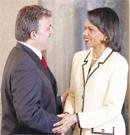
This was exactly the agenda of Rice’s meetings with the Turkish top officials. Rice met with President Ahmed Necet Sezer, Prime Minister Recep Erdogan and Foreign Minister Abdullah Gul. The sides agreed to draft a Common Strategic Vision. In Ankara Rice said that Turkey is the US’ key partner. The brief few-page Common Strategic Vision will consist of three main chapters: (1) fight with terrorism, (2) relations with the EU, (3) Big Middle East project and addenda concerning Cyprus, PKK, Iran, Iraq, the Middle East peace process and relations with Russia. To date, the US has a similar document only with India.
The Turkish public had been well prepared for Rice’s visit. On the eve of the visit, all Turkish media reported that during the last few years the US has been providing the Turkish armed forces with information support, particularly, through the Echelon global surveillance system. Even though most of this information was about PKK (it was this very source that enabled the Turkish armed forces to hold a series of successful operations in Turkey’s south-eastern regions in March-April), Rice did not give a specific yes to Turkey’s request to stifle PKK’s positions in Northern Iraq or to let it do it itself. At the same time, she hinted that the US may close its eyes on this, i.e. on a forthcoming Turkish military operation in Northern Iraq. It’s noteworthy that Turkey launched this operation while Rice was still in its territory. So, we can say that the US has, in fact, given a sanction to it.
One more interesting point of fact is that before coming to Ankara Rice had signaled that she supports Turkey’s position on Cyprus, thereby, creating a favourable climate for her talks in Ankara. Particularly, in Athens she said that Turkey is already a European country and that the Republic of Cyprus should do its best to make Turkey’s EU membership a reality. Ankara made a reciprocal gesture: it turned down Iran’s request for National Security Secretary Ali Larijani’s visit to Turkey. The Turks advised Larijani to put off his visit for early May, i.e. after Rice’s visit. They may well act as a go-between at the talks with Larijani by telling him what the US has said. This is quite typical of Ankara: to get most of the tensions between two allies and to act as a negotiator between them.
Yet one more interesting point of fact is that Turkey had launched its all-time big anti-Kurdish military campaign exactly by the time of Rice’s Ankara visit. Fearing Europe’s anger, Turkey had, thereby, tried to “legitimize” its action. Turkey’s goal is to curb the activity of Kurds in its south-eastern regions, to provoke them into counter-action and, with US acquiescence, to track the fighters down to Northern Iraq and to put an end to them there. This is, in fact, a repetition of campaigns it used to hold in Saddam times.
The events of the last week have confirmed this conclusion. Turkey was holding its military campaign while Rice was talking with Turkish leaders in Ankara and had crossed the Iraqi border when Rice was still in the Turkish capital. During the night of Apr 26-27, after being informed that fighters from the PKK training camps in Khaftanin and Metina (Northern Iraq) were planning to infiltrate into the Turkish territory, the Turkish army launched a preventive attack, threw back the enemy and pursued it into the Northern Iraqi territory. Armed with night vision cameras, the Turkish soldiers liquidated the covers of the Kurds.
The chief of Turkey’s general staff, Gen. Hilmi Ozkok refused to answer any questions. Instead, Ms Rice “calmed down” the Iraqi authorities by saying that Turkey was not going to cause damage to Iraq but was only trying to destroy PKK bases. US Secretary of Defense Donald Rumsfeld said the same. This means that when in Ankara Rice gave her consent to Turkey’s operation in Northern Iraq. We can’t yet give all the reasons of this consent but, undoubtedly, it was the result of 'horse trading' .
The next day Turkish Foreign Minister Abdullah Gul confirmed that Turkish troops had violated the Turkish-Iraqi border but said that the Iraqi authorities' protests were uncalled for (the note of protest handed by Iraqi Ambassador to Turkey Umran Sabah) as “the destruction of PKK fighters in the territory of Northern Iraq is good for Baghdad too.” “For as long as Iraq is unable to guard its own borders, we’ll do it ourselves,” Gul said. This statement shows how confident Turkey is in this matter. It undertakes to 'protect' the border of a neighbor country without its consent and, in the meantime occupies, part of its territory. Obviously, Washington has not only agreed to but also guaranteed Turkey’s actions.
In his turn, the leader of the Iraqi Democratic Party of Kurdistan Masud Barzani attempted to refute the fact of the Turkish invasion into Iraq. This shows that, sacrificed by the US once again, the leaders of Iraqi Kurdistan are trying to save their faces. Meanwhile, the Turkish troops are reported to have gained control over 20-km area in Northern Iraq and to be holding a large-scale operation to destroy PKK fighters. They have already destroyed the Zap training camp near Ahmediye – 30 km deep into Iraq. During the operations Turkish planes heavily bombed the PKK bases. Availing itself of the opportunity, Turkey’s general staff has hurried to deploy a 110,000-strong corps on the border with Iran and to say that this border is fully controlled. This may be part of Turkey’s preparations for the anti-Iranian campaign.
Summing up the results of Rice’s visit to Ankara, we can say that the US is pressing hard on Turkey so as to prevent the recurrence of the Mar 2003 events, but, at the same time, it is catering for some of Ankara’s major interests. According to confidential information, Rice has demanded a straightforward answer from Turkey – “who is it with: with the US or Iran?” The Turkish officials are pretending they have given no specific promises to Washington yet and will act in line with the UN Security Council’s resolution. But there are facts that prove that during its secret talks with the DS and Pentagon and earlier this year with Tel Aviv, Turkey showed that it might well join the US and Israel.
Turkey’s key argument is the fear of its generals that a nuclear bomb in the hands of Iran may break the balance of forces between Ankara and Tehran. Turkish military analysts say that the decades-long peace between Turkey and Iran is fragile and is based on the parity of their armed forces. At the same time, the political rulers of Turkey, namely, the pro-Islamist PJD, fear that strong Iran may be a strong enemy in the struggle for sway in the Muslim world and want to weaken it.
But given the growing anti-American moods and upcoming elections in the country, PJD would still like to get the UN SC’s sanctions for the military campaign against Iran: PJD is careful in its policies and is not going to say yes to whatever the US wants. Meanwhile, Turkey’s General Staff, on the contrary, hopes that joint actions with the US will help it to strengthen its position in own country and to curb the further rise of Islamism there, particularly, to prevent PJD leader Erdogan from becoming president.
This is proved by the following circumstances: (1) a number of scandalous differences between PJD and US officials, particularly, the premier’s advisor Zapsu’s appeal to Washington not to give up PJD and Erdogan; and (2) the frequent visits of US representatives to Turkey. So, we can assume that Rice’s promise of a new strategic partnership treaty soon may well come from an agreement between Pentagon and Turkey’s General Staff. And so, we can accept the view of Turkish analysts about “a new stage” in Turkish-American relations with one proviso: just like several years ago, the US and Turkey will build their relations on the basis of military cooperation. Ankara has two problems the US can help it to solve: Cyprus and PKK. Rice’s Athens statement that Cyprus should do its best for Turkey to become an EU member, the entry of Turkish troops in Northern Iraq (something Ankara has been demanding for three years already) and the US’ connivance in the matter show that Ankara and Washington have, in principle, agreed on their cooperation over several important directions, including over Iran.
The approval of Turkey’s entry into Iraq may also imply that the sides have agreed on Kirkuk. Particularly, the Turkish prime minister and foreign minister told Rice that this town is very important in both internal political and regional terms and one can’t leave it under the control of one ethnic group. By “ethnic group” they obviously meant the Kurds.
There is a strong possibility that Washington is playing a situational game with several players at once. Getting strong support in Iraq in 2003, the US realized once again how important it is to cooperate with the Kurdish Peshmarga. But, obviously, Washington is not hurrying to give the Kurds official independence so as to have something to offer the next time the Kurds may become useful. In case of a campaign in Iran, the US will need not only Turkey, but also Kurds: who will help it to keep up stability in Iraq and to break stability in Iran through local Kurds. There is a strong possibility that Kurds may be used by Iran. And so, by letting Turkey into Northern Iraq, i.e. Kurdistan, Washington has, on the one hand, dealt a card to Ankara but, on the other, secured a card for itself – for promising at later meetings with Kurds that it will urge Turkey to withdraw from Kurdistan if they promise to cooperate over Iran. Ankara perfectly knows that the US’ approval of its campaign in Northern Iraq does not yet mean approval of its deployment in that territory.
So, obviously, in the next 10-15 years the US’ foreign policy will be focused on Middle East, Caspian Basin, Caucasus, Central Asia, South-Eastern Asia. Apparently, the US still needs Turkey as a military and political partner. Besides, Turkey is still the only partner of Israel despite the recent tensions over the PJD’s Islamist policies.
Turkey also needs the US. If Iran gets stronger, and the balance of forces in the region is changed, Turkey will find it hard to keep its positions alone. Turkey is obviously conceding in its relations with the US so as not to face Islamism tête-à-tête. Today it wants Washington just to curb Iran but not to war with it. If a war starts Turkey will find it hard to avoid being involved. But for the time being, it is just trying to capitalize on the regional crisis.
At its regular monthly conference on April 27, Turkey’s National Security Council focused on Turkey’s military campaign against PKK, Rice’s contacts in Ankara and the new government and nuclear program crises in Iraq and Iran, respectively. Particularly discussed was the strategy of Turkish military operations on the other side of the border. It’s noteworthy that after the 5.5-hour conference the Turkish premier had a tête-à-tête meeting with Transport Minister Yildirim, who had just come back from Iran. The council also discussed internal political problems, particularly, the strengthening of the Islamist policy.
Naturally, for us the dynamics of Turkish-American relations are interesting mostly in terms of Turkey’s relations with Russia and its role in the Caucasus. Having decisive rapprochement plans with Turkey, the US, at the same time, demands that Ankara stop its big plans with Moscow. Particularly, when in Ankara, Rice demanded that Gazprom be removed from the 600 mln EUR project to connect the gas networks of Turkey and Greece. She had earlier demanded the same in Athens. Some sources say that Rice proposed replacing the Russian gas by the Azeri one to be imported to Turkey via the Baku-Tbilisi-Erzurum pipeline. This demand has upset Turkey’s plans to become a mediator between Russia and Europe and to, thereby, show its importance for the EU. But Turkey’s tighter relations with the US may lead to its stronger positions in the Caucasus, particularly, in the South Caucasus.
So, the Baku-Tbilisi-Ceyhan and Baku-Tbilisi-Erzurum pipelines, to be launched in 2007, will link Azerbaijan, Georgia and Turkey even tighter. In Ankara the US and Turkey might also discuss the building of a railroad Kars (Turkey)-Tbilisi-Baku, particularly, the possibility of US support in the project. If we add to this the talk that Turkey may be allowed to have a greater say over the South Caucasus, we may well assume that very soon the Russian military bases in Georgia will be replaced by Turkish troops under the NATO aegis. Then, by forcing Georgia to populate the Turkish-Georgian borderline regions with ethnic Turks (Meskhetins), the EU and the US will chain it up to the West, with Ankara gaining bigger influence over Tbilisi’s policy.
Ankara has repeatedly said that it is ready to become a mediator in the Karabakh peace process. This would give Turkey the authority of big regional power. Despite Armenia’s resistance, the US may well involve Turkey in the process, though, initially, just as an observer. In summary, we should note that the unpredictability of the developments over Iran and the further deepening of Turkish-American relations are very negative factors for Russia’s positions in the South Caucasus.

Tuesday, May 02, 2006

Sen. Biden: Iraq Should be Divided into 3 Regions

01/05/2006
WASHINGTON (Reuters) -Iraq should be divided into three largely autonomous regions -- Kurd, Sunni Arab and Shiite Arab -- with a weaker central government in Baghdad, Sen. Joseph Biden (news, bio, voting record) said on Monday.
In an op-ed article in The New York Times, Biden, the Senate Foreign Affairs Committee's top Democrat, said the Bush administration's effort to establish a strong central government in Baghdad had been a failure, doomed by ethnic rivalry that had spawned widespread sectarian violence.
"It is increasingly clear that President Bush does not have a strategy for victory in Iraq. Rather, he hopes to prevent defeat and pass the problem along to his successor," said Biden and co-author Leslie Gelb, president emeritus of the Council on Foreign Relations.
Iraq's Sunnis, the driving force behind the insurgency, would welcome the partition plan rather than be dominated by a Shiite-controlled central government, Biden said.
He said the division of Iraq would follow the example of Bosnia a decade ago when that war-torn country was partitioned into ethnic federations under the U.S.-brokered Dayton Accords.
Biden billed his plan as a "third option" beyond the "false choice" of continuing the Bush administration policy of nurturing a unity government in Iraq or withdrawing U.S. troops immediately.
As part of the plan, the United States should withdraw most of its troops from Iraq by 2008, except for a small force to combat terrorism, Biden said.
Under Biden's proposal, the Kurdish, Sunni and Shiite regions would each be responsible for their own domestic laws, administration and internal security. The central

Wednesday, April 26, 2006

Rice, in Greece and Turkey, Holds Talks on Iraq and Iran


NY TIMES
By STEVEN R. WEISMAN
Published: April 26, 2006
ANKARA, Turkey, April 25 — Secretary of State Condoleezza Rice assured Turkish leaders on Tuesday that the United States would step up efforts to stop Kurdish insurgents in Iraq from infiltrating into Turkey, but she cautioned the government not to send troops to Iraq to do the job.....read more

Tuesday, April 25, 2006

Shiite Militias Move Into Oil-Rich Kirkuk, Even as Kurds Dig In

Control of Iraqi City Has Long Been in Dispute
By Jonathan FinerWashington Post Foreign ServiceTuesday, April 25, 2006; Page A16

KIRKUK, Iraq -- Hundreds of Shiite Muslim militiamen have deployed in recent weeks to this restive city -- widely considered the most likely flash point for an Iraqi civil war -- vowing to fight any attempt to shift control over Kirkuk to the Kurdish-governed north, according to U.S. commanders and diplomats, local police and politicians.
Until recently, the presence of the militias here was minimal. U.S. officials have called the Shiite armed groups the deadliest threat to security in much of the country. They have been blamed for hundreds of killings during mounting sectarian violence in central and southern Iraq since the bombing of a revered Shiite shrine in February.......continue

Sunday, April 23, 2006

Assassination On Turkmen Politician in Kerkuk


A Turkmen Politician killed by Kurdish terrorists in Kerkuk.

Sabah Ketene, a memeber of the Turkmen Council and former president Iraq Turkmen Front was killed by three Kurdish militia members by machine gun shot from a black car right front of Ketene's house in Kerkuk at 11:00 am in April 22 2006.

Thursday, April 20, 2006

END SECTARIAN VIOLENCE


By Tulin Daloglu
April 18, 2006

Four months after holding its historic national elections, Iraq still has failed to form a government. The parliamentary session that was supposed to be held yesterday has been postponed to a later date. The problem appears to be Prime Minister Ibrahim al Jaafari, but in fact it runs deeper. "Not standing up the government fuels the sectarian violence," said Ambassador Jim Jeffrey, senior adviser to Secretary of State Condoleezza Rice on Iraq. Mr. Jeffrey says the United States has not "put the torch to sectarian violence." He is right -- but not completely...... continue

ITF visits Turkish Polititians

Visit to MHP (Nationalist Action Party)
kerkuk.net 19.04.2006
Iraq Turkoman Front Turkish Representative Ahmet Muratlı visited Mr. Devlet Bahçeli, the Chairman of Milli Hareket Partisi (MHP) in his offices at the party headquarters to invite him to the reception to be held at the Ankara Hilton Hotel to celebrate the 11th Founding Anniversary of ITF.
More Details

Visit to DSP (Democratic Left Party)
kerkuk.net 19.04.2006
Iraq Turkoman Front Turkey Representative Ahmet Muratlı visited Demokratik Sol Parti (DSP) Chairman Zeki Sezer in his offices at the party headquarters to extend him an invitation to the reception to be held at the Ankara Hilton Hotel on the 24th of April to celebrate the 11th Founding Anniversary of the ITF.
More Details

Visit to Hür Parti (Freedom and Change Party)
kerkuk.net 19.04.2006
Iraq Turkoman Front Turkey Representative Ahmet Muratlı visited Hürriyet ve Değişim Partisi (HÜR PARTİ) Chairman Yaşar Okuyan in his offices at the party headquarters to extend him an invitation to the reception to be held at the Ankara Hilton Hotel on the 24th of April to celebrate the 11th Founding Anniversary of the ITF.
More Details

Visit to SHP (Socialdemocratic People’s Party)
kerkuk.net 19.04.2006
Iraq Turkoman Front Turkey Representative Ahmet Muratlı visited Sosyaldemokrat Halk Partisi (SHP) Chairman Murat Karayalçın in his offices at the party headquarters to extend him an invitation to the reception to be held at the Ankara Hilton Hotel on the 24th of April to celebrate the 11th Founding Anniversary of the ITF.

Wednesday, April 19, 2006

Blame flies over Iraqi leadership stalemate

BAGHDAD, Iraq — Iraqi politicians in the past few days have begun using uncommonly bitter language to blame one another for the impasse over a new government, a development that suggests that stalemated talks are nowhere near success....continue

Saturday, April 15, 2006

Why Iraq Was a Mistake


A military insider sounds off against the war and the "zealots" who pushed it

By LIEUT. GENERAL GREG NEWBOLD (RET.)

Two senior military officers are known to have challenged Defense Secretary Donald Rumsfeld on the planning of the Iraq war. Army General Eric Shinseki publicly dissented and found himself marginalized. Marine Lieut. General Greg Newbold, the Pentagon's top operations officer, voiced his objections internally and then retired, in part out of opposition to the war. Here, for the first time, Newbold goes public with a full-throated critique: ..... 1 2 3 Next >>

No civil war, no prime minister

A decision over the Iraqi prime minister position continues to impede the creation of a government three months after elections
Al-Ahram

As opposition within certain currents continued to grow over Iraqi Prime Minister Ibrahim Al-Jaafari being named to remain in office, more Iraqi forces have joined the chorus this week against Al-Jaafari's nomination. While Iraqi politicians continue to be deadlocked over the issue, sectarian violence with reprisal attacks against both Sunni and Shia continued unabated.
The Iraqi Accordance Front (IAF) -- the biggest Sunni bloc in the assembly -- have clearly now stated that its final decision is not to back Al-Jaafari's nomination. Dhafer Al-Ani, spokesperson for the IAF, reaffirmed Sunday the front's stand against Al-Jaafari. Al-Ani said the front suggested to the United Iraqi Alliance (UIA) -- the biggest Shia bloc in the assembly -- to propose other names for consideration. On Monday, the IAF forwarded a letter to Abdul-Aziz Al-Hakim, head of the UIA, notifying him that "they still have reservations about Al-Jaafari."
Similar statements were made by Kurdish officials who openly criticised Al-Jaafari's political performance, demanding that a new candidate be named by the UIA. Under the Iraqi constitution, the prime minister has to be a member of the bloc that holds the majority of seats in parliament. But there should also be a political consensus on the candidate from other forces sharing power.
The firm Sunni-Kurdish stand against Al-Jaafari prompted the UIA to enter a fresh round of internal talks to resolve the deadlock which has been the main stumbling block barring the formation of a national unity government months after parliamentary elections were held.
On Tuesday, the London-based Al-Hayat newspaper reported that a breakthrough had taken place when the young Shia leader Muqtada Al-Sadr, a staunch proponent of keeping Al-Jaafari, showed signs of backtracking on his support for Al-Jaafari. But there are differences of opinion over alternative names. The Sadrists stated clearly that they do not accept the nomination of Adel Abdul-Mahdi, whose name was put forward by the Supreme Council for Islamic Revolution in Iraq (SCIRI), one of the Shia forces under the umbrella of UIA. Karim Al-Bekhati, spokesperson of the Sadrist movement, said the movement backs the nomination of Jawad Al-Maliki, who is considered to be Al-Jaafari's right-hand man in Al-Daawa Party. Other names put forward included National Security Adviser Muwafaq Al-Rubei, Ali Al-Adeeb and Abdul-Karim Al-Enzy also from Al-Daawa.
The breakthrough instigated by the Sadrists came only one day after a meeting was held Sunday of the seven factions comprising the UIA. On Monday, another meeting brought together a panel comprised of Jawad Al-Maliki, Humam Hammodi from SCIRI and Hussein Al-Shahrastani to discuss the issue with Kurdish and Sunni blocs. Monday's meeting, nonetheless, failed to produce a resolution to the issue.
Both Sunnis and Kurdish blocs hold Al-Jaafari responsible for the sectarian tension that is driving the country to the brink of civil war. The crisis reached its peak with the bombing of the Samaraa shrine, which some press reports published in Arab media suggested could have been prevented by Al-Jaafari's government. The reports accused members of Al-Jaafari's government -- particularly in Interior Ministry circles -- of having prior knowledge of the bombing and yet doing nothing to prevent it. A wave of reprisal attacks targeting both Sunni and Shia citizens and religious sites indicated to many that Iraq was segueing into a silent civil war.
Attacks continued unabated this week. On Friday a triple suicide bomb targeting Buratha Mosque in Baghdad left at least 90 dead and 160 injured. It was the first time, nonetheless, that Interior Ministry officials warned of possible attacks on mosques on Friday. Officials said they received intelligence that insurgents were preparing to detonate bombs around the capital. Some Iraqis accuse the Interior Ministry of being complacent in the face of attacks. Others point a figure at occupation authorities, which they believe are responsible for most of the attacks targeting Shia mosques.
During his Friday sermon, Moqtada Al-Sadr accused US troops of being behind the attack in Najaf that claimed the lives of 10 Iraqis last Thursday. "This is not the first time the occupation forces and their death squads have resorted to killings," Al-Sadr was quoted as saying. During the week marking the fall of Baghdad on 9 April 2003, violence continued. On Saturday, a car bomb in Musayib south of Baghdad left at least six people dead -- most of them Shia pilgrims.
Despite escalating sectarian tension, Iraqi politicians continued to firmly deny that the country was gripped by civil war. A statement by Egyptian President Hosni Mubarak to Al-Arabiya television Sunday, in which he said civil war "almost started in Iraq", angered many Iraqi politicians. Iraqi President Jalal Talabani said Mubarak's comments were not accurate. "It is true that there are some kind of clashes among Sunnis and Shias. But it is not civil war," he told reporters.

Thursday, April 13, 2006

What is Iran’s Man in Iraq After?


In an exclusive interview, Tehran’s Hassan Kazemi Ghomi takes on Washington and counters U.S. claims that he and his country are subverting the Baghdad government.

Wednesday, Apr. 12, 2006

What is Tehran’s main man in Iraq up to? The U.S. military, which claims Iranian special forces and intelligence operatives have infiltrated Iraq, insinuates that Hassan Kazemi Ghomi, the charge d’affaires of the Iranian embassy, is intent on undermining Washington's mission in Baghdad. Indeed, U.S. military intelligence and the American-backed Iraqi National Intelligence Service told TIME that Ghomi is a member of the Iranian Revolutionary Guard Corps’ elite Quds Force, a special forces outfit much like the Green Berets, with specialized skills in working with local forces and militias.

Tuesday, April 11, 2006

Saudi Arabia must act to contain Iraq strife - study


11/04/2006
RIYADH, (Reuters) - Saudi Arabia should try to avert Iraq's fragmentation by lobbying against any premature withdrawal of U.S. forces and by pressing Iran to stop meddling, a report by a security adviser to the Saudi government says.
"A civil war may well be inevitable. Such a development would have the gravest implications for the entire region, especially Saudi Arabia, which shares its longest international borders with Iraq," Nawaf Obaid said in his report on how Saudi Arabia should respond to the situation in Iraq.
The report, released by the U.S.-based Center for Strategic and International Studies, was based on dozens of interviews with military and intelligence officials in the region, and numerous conversations with Iranian officials, Obaid said.......

Saturday, April 08, 2006

Analysis: The many faces of Iraq's war

By Martin Sieff
UPI Senior News Analyst
Published April 7, 2006

......... And in the north, largely overlooked, the Kurds supported and protected by U.S. power, have been forcibly exerted their own control over resentful Assyrian and Turkoman minority communities. The Kurd-Turkoman conflict, almost totally ignored in the U.S. media, is particularly significant because Turkey, a key U.S. ally and NATO member and traditionally hostile to Kurdish independence, feels strong ethnic loyalty to the Turkomans from the days of the old Ottoman Empire. As Chaim Kaufmann wrote in the New York Jewish newspaper the Forward Friday, "Not one but two full-scale communal conflicts are raging in Iraq. In the north of the country, the Kurds are fighting several other communities for the oil-rich Kirkuk Province. Further south, Sunnis and Shiites are struggling for control of a roughly 100-mile-deep band of mixed settlement that runs across central Iraq, including Baghdad." ............

other analyses:

Monday, April 03, 2006

War in Iraq is a Continuation of the Past


by Tugrul Keskin
In his article, "The Last Exit From Iraq," Joel Rayburn argues that the US is not the first country who occupied Iraq and suggests that the US should take a lesson from the British experience. In the context of his analogy, unfortunately it is accurate information; however, he forgets to include a historical analysis of British colonialism at the beginning of this century and its relationship with the American occupation of Iraq. The American occupation of Iraq is a continuation of British colonialism and today is a reflection of the past. Iraq is an artificial state; it has an artificial national identity based on territoriality, as established under British imperialism. However, if we look at the other countries in the region, most of these countries are not different than Iraq. There is no difference between Iraq and Syria, Kuwait and Saudi Arabia, Jordan and Lebanon. The differences between these countries are very similar to differences between Georgia and South Carolina or New York and Washington DC. ....

Saturday, April 01, 2006

Shias call on al-Jaafari to quit


Senior members of Iraq's ruling Shia Alliance bloc have for the first time openly called on Ibrahim al-Jaafari to step down as prime minister to break months of deadlock over the formation of a national unity government.

Al-Jaafari warns of US interference


Friday 31 March 2006, 2:49 Makka Time, 23:49 GMT
Ibrahim al-Jaafari, the Iraqi prime minister, has warned against US interference in his country's politics and defended his ties to a Shia militia.

Report To Ministry Of Foreign Affairs

The Iraqi Turkmen live in an area that they call “Turkmenia” in Latin or “Turkmeneli” which means, “Land of the Turkmen. It was referred to as “Turcomania” by the British geographer William Guthrie in 1785. The Turkmen are a Turkic group that has a unique heritage and culture as well as linguistic, historical and cultural links with the surrounding Turkic groups such as those in Turkey and Azerbaijan. Their spoken language is closer to Azeri but their official written language is like the Turkish spoken in present-day Turkey. Their real population has always being suppressed by the authorities in Iraq for political reasons and estimated at 2%, whereas in reality their number’s are more realistically between 2.5 to 3 million, i.e. 12% of the Iraqi population.
Turkmeneli is a diagonal strip of land stretching from the Syrian and Turkish border areas from around Telafer in the north of Iraq, reaching down to the town of Mandeli on the Iranian border in Central Iraq. The Turkmen of Iraq settled in Turkmeneli in three successive and constant migrations from Central Asia, which increased their numbers and enabled them to establish six states in Iraq.
After the liberation of Iraq, the Turkmen had high expectations of the interim administration established after April 9, 2003. The Turkmen expected to see democracy, fairness, and an end to discrimination, the right to self- determination and an end to violence. Unfortunately, the opposite has occurred regarding the human rights situation in Iraq, in particular concerning the Iraqi Turkmen. However, the Iraqi Turkmen should not be seen as a danger to Iraqi sovereignty but as an asset to strengthen Iraqi stability and as a part of the big mosaic of Iraqi unity.
In order to have democracy, stability and tranquillity in Iraq. The Iraqi government must guarantee human rights for all citizens, regardless of ethnicity and reach agreement about these issues with representatives of Kurds, Turkmen and Arabs. Presently the Turkmen have been undergoing campaigns by the Kurds in Turkmeneli in an often more brutal fashion than carried out on Kurds by Saddam Hussein. The Iraqi Kurds are attempting by various methods to eliminate Turkmen identity especially from Kerkuk City in order to dilute them into Kurdish society.
Kerkuk holds strategic as well as symbolic value; the ocean of oil beneath its surface could be used to drive the economy of an independent Kurdistan, the ultimate goal for many Kurds. The Kurds hope to make the city and its vast oil reserves part of an autonomous Kurdistan whereas both the Turkmen and Arabs are fiercely opposing the inclusion of Kerkuk to the autonomous region. Because of Kerkuk’s oil resources and its strategic importance, the fight over the control of the province proved to be one of the focal points of the conflict in northern Iraq. Nevertheless, the two main Kurdish parties, the Kurdistan Democratic Party “KDP” and the Patriotic Union of Kurdistan “PUK”, have long considered Kerkuk to be an integral part of a future Kurdish federal region. In contrast the Turkmen of Iraq vigorously oppose the idea of Kerkuk being a part of the Kurdish federal region. Moreover, Turkey has repeatedly expressed concern about Kurdish aspirations over Kerkuk, stating that Kurdish control over Kerkuk could fuel Kurdish nationalism in the region and undermine the rights of Turkmen residents in Kerkuk. This could lead to instability in the region and, possibly, civil war. Kerkuk itself has become almost synonymous with the abusive Kurdasiation campaign.
The Kurds have intensified their Kurdisation campaign in the city of Kerkuk. The Kurdish officials working at the administration of the Kerkuk Municipality have been confiscating real estate and lands belonging to the town administration with a view to granting them to ethnic Kurds newly arrived in Kerkuk and who are not originally from the town. The main objective and intention of the Kurds is to change the demographic structure of the city ahead of the census to be held on the Dec. 31, 2007.
The demands of the Iraqi Turkmen Association in United Kingdom are as follow:
Regarding the British Consulate in Iraq, Kerkuk shall have direct liaison with the Iraqi Turkmen representative in Kerkuk in discussion of matters that are related to Turkmen people. The meeting shall be held without the influence and interference from Kurdish political organisation. Moreover, in order to avoid any misleading, twisting and manipulation of the discussed subjects during the interpretation, the Turkmen would like to provide their own interpreter during the discussion rather than an interpreter being provided by Kurds.
We are glad to provide you with our contact name in Kerkuk, Mr.Ali Mehdi and Mr. Hassan Turan who are currently serving as a Member of the Governing Council of Kerkuk.
For the last few years, all Iraqi Turkmen recommendations and suggestions that have been put forward to the allied forces in and outside of Iraq have never been taken to consideration and have fallen on deaf ears. After the fall of the previous Iraqi regime, the Turkmen had high expectations of the interim administration established after April 9, 2003. The Turkmen expected to see democracy, fairness, and an end to discrimination, the right to self-determination and an end to violence. Unfortunately, the opposite has occurred regarding the human rights situation in Iraq, in particular concerning the Iraqi Turkmen.
The police force and military personnel that are currently serving in Kerkuk shall not be controlled by a specific group of people or political parties. The police force and military personnel from various parts of Iraq shall be deployed and utilised in Kerkuk rather then being controlled by specific militia.
The deployed police force and army personnel in Kerkuk shall be independent and not be a linked to any political party but unfortunately the established police forces clearly orchestrated in the last two elections taking sides in favouring groups that have appointed them.
The total rejection of Article 58 and referendum in Kerkuk on the final status of the city in 2007.
The Turkmen, as staunch believers in firm national principles, strongly reject the articles 58 and clauses in the Iraqi draft constitution that do great prejudice against the Turkmen and their national identity. The Turkmen are extremely worried over efforts aiming to make Kurds a majority in the northern Iraqi oil town of Kerkuk, as U.S. backed Kurdish forces took the city under control.
The fate of the disputed Iraqi city of Kerkuk is vital for all of Iraq and a planned referendum on its status should be held across the country, not in Kerkuk only as intended now. The Turkmen declared that Kerkuk is an Iraqi city and all the people of Iraq should decide on its fate. A referendum to be held only in Kerkuk would not be acceptable and valid since it is extremely easy to manipulate election results in the city.
The issue of Kirkuk’s status is potentially explosive for Iraq, and ethnic conflict over the city could spark violent clashes and even a civil war across Iraq that could eventually lead to disintegration of the country. The Turkmens and Arabs plight for the demographic structure of Kerkuk has been seriously distorted as Kurds, backed by armed Peshmerga forces, have been migrating into the city in large groups claiming to be original residents pushed out of Kerkuk in the past decades as part of the now-ousted Saddam Hussein's Arabization campaign.
Iraq's interim constitution, which is expected to be approved by the country's first post-war permanent Parliament in the coming months, foresees a referendum in Kerkuk on the final status of the city in 2007. Kurds claim the city must be a part of their autonomous region, which currently covers three provinces in the north. Turkmens and Arabs are also vying for control of the city. With a wave of Kurdish immigration to Kerkuk under way for several months, a Kurdish victory in the upcoming referendum is seen as highly likely.
There were serious irregularities in the city in Iraq's parliamentary elections held on Dec. 15 and called for efforts to rewrite flawed voter lists and register true residents of the city in an internationally observed campaign. The United Nations, the Arab League and the Organization of the Islamic Conference (OIC) should get involved in the process of registering the genuine residents of Kirkuk’s status is extremely critical because it would either unite or divide Iraq. Moreover, Iraqi independent commission completely shall not be used or involved in any sort of active role for any referendum that might be carried out on in the future of Kerkuk since all the Iraqi independent commissioned are some how biased and affiliated and influenced by specific political party. Also, during the last election the, Iraqi independent commission had proven to be extremely weak, ineffective and was easily bound to the pressure from political parties and they were subjected to manipulation and influences that was created by a specific armed militia.
In conclusion any decision on the future of Kerkuk should be under control of UN and not the Iraqi Government as we all know that the Iraqi Government is controlled by three parties and they have their own strategies. The referendum that is going to be held before the end of 2007 is going to be vital and would have dramatic affect on Iraq in general and Kerkuk city especially. We recommend that the suggested referendum to be organised and run directly by the U.N and the appointee of this referendum to be independent and directly to be appointed by the U.N. Also we want all the observers to be appointed by the U.N and to be independent.
The Kurdization policies, more active role and British government involvement to halt both Kurdish parties from changing the demography of the North of Iraq. The systematic forcible transfer of the Turkmen and Arabs populations aimed at changing the demographic nature of northern Iraq is a policy that is commonly referred to as Kurdization. The two main Kurdish parties’ programme of resettling Kurds families who were brought from brought from other provinces, such as Iran, Turkey, Syria and north of Iraq to replace and dilute the Turkmen and Arab population.
The forced and arbitrary transfer of populations is not permissible under international law and is a crime against humanity. Nevertheless, the both Kurdish parties sought to alter the demographic make up of northern Iraq in order to reduce the political power and presence of Turkmen and Arab and consolidate control over this oil-rich region.
The repatriation of all the Kurds who were brought to Kerkuk and surrounding areas from other provinces, such as Iran, Turkey, Syria and north of Iraq to be return to their original places. Many of them were settled in the houses of the forcibly evicted Arabs and of the high-ranking Ba’ath party members who fled from Kerkuk city after the fall of the Ba’ath regime. The new Kurdish arrivals have been squatting in the governmental and the high-ranking Ba’ath party members’ houses that have been deserted. Also, the squatters have been given original Iraqi identity cards, passport and registered identity showing them as residents of Kerkuk.
The disarmament of the Kurdish militia and the utilization of the UN troops in North of Iraq as a peace keeping instead of the US troops since all the Kurdish militia in north of Iraq whom are terrorizing the population. Human rights organization openly declared that they couldn’t see any difference between the practices of Saddam’s administration and those of the Kurds. Saying the attitudes of Kurdish Peshmerga also damage the US reliability and nobody wants to work with Americans any more, because, the Americans gave power to the Kurds and Shiites. Nobody has any rights except the Kurdish Peshmerga and Shiite militias. The Kurdish rebels still remain armed with weapons and they are enforcing their ideas on the Turkmen, Arabs and Assyrians against their wishes.
The police and security units, forces led by Kurdish political parties and backed by the U.S. military, have abducted hundreds of Turkmen and Arabs and Turkmens in this intensely volatile city and spirited them to prisons in Kurdish-held northern Iraq, according to U.S. and Iraqi officials, government documents and families of the victims. The Turkmen and Arabs were seized off the streets of Kerkuk in joint U.S and Kurdish militia. The Turkmen and Arabs men have been transferred secretly and in violation of Iraqi law to prisons in the Kurdish controlled cities of Erbil and Suleymaniya, sometimes with the knowledge of U.S. forces. The Turkmen and Arabs detainees, including merchants, members of tribal families and soldiers, have often remained missing for months; some have been tortured, according to released prisoners.
The ratification of the new constitution to include that Iraq consists of Arab, Kurds and Turkmen. In the newly formed constitution by the interim government it is clearly stated that Iraq consists of only Kurds and Arabs. The Turkmen have been totally disregarded and we strongly believe that a new Iraq must be inclusive, ethnically and religiously balanced in representing Iraq's three main groups. The Iraqi constitution, which was submitted on Monday, August 22, 2005, is a historic document in Iraq’s history and become the most influential document produced in the Middle East in 100 years. The constitution will have a profound influence on the development of democracy and human rights. Although, it is a step, it takes more than it does gives. We must keep in mind that the constitution was written under the occupation forces and under the influence of the Shi’aa and Kurdish parties, therefore, it remains to be seen how the jurist will interpret and apply the language of this document so that it protects the minorities of Iraq. Minorities that include Turkmen, Assyrians, Yezidis and Shabaks.
A separate federation for Kerkuk
Turkmen are against such a federation. A federal regime not based on solid ground would plunge Iraq and the region into chaos but Turkmens have warned that they would pursue their own path to have a Turkmen region if the process of Iraq going to pieces along ethnic and sectarian differences proves to be irreversible. But the Turkmen right to self-rule is reserved if this process cannot be stopped, the proposed Turkmen region would stretch from the northwest town of Tal Afar near the border with Syria down to Kerkuk and Mandeli, further southeast, close to the border with Iran. With a significant majority of Turkmens living in the Kurdish-controlled region in the north, the Kurdish attempts to consider all non-Kurdish groups as a minority and deny them many rights that they want for themselves in the new Iraq. “Looking at the vast area that is included in the Kurdish region, one can see that close to 40 percent of the population is made up of non-Kurdish people. Still, they call a region with such demographic diversity ‘Kurdistan.
Iraqi Turkmen Association in U.K,
Email msalman@eircom.net
Mofak Salman, Ireland, Dublin