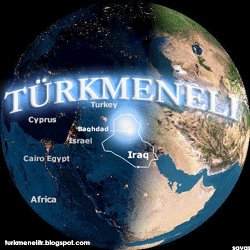
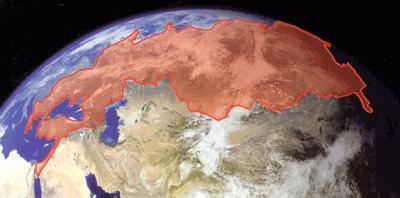
The Iraqi Turkmen live in an area that they call “Turkmenia” in Latin or “Turkmeneli” which means, “Land of the Turkmen. It was referred to as “Turcomania” by the British geographer William Guthrie in 1785. The Turkmen are a Turkic group that has a unique heritage and culture as well as linguistic, historical and cultural links with the surrounding Turkic groups such as those in Turkey and Azerbaijan. Their spoken language is closer to Azeri but their official written language is like the Turkish spoken in present-day Turkey. Their real population has always being suppressed by the authorities in Iraq for political reasons and estimated at 2%, whereas in reality their number’s are more realistically between 2.5 to 3 million, i.e. 12% of the Iraqi population.
Turkmeneli is a diagonal strip of land stretching from the Syrian and Turkish border areas from around Telafer in the north of Iraq, reaching down to the town of Mandeli on the Iranian border in Central Iraq. The Turkmen of Iraq settled in Turkmeneli in three successive and constant migrations from Central Asia, which increased their numbers and enabled them to establish six states in Iraq.
After the liberation of Iraq, the Turkmen had high expectations of the interim administration established after April 9, 2003. The Turkmen expected to see democracy, fairness, and an end to discrimination, the right to self- determination and an end to violence. Unfortunately, the opposite has occurred regarding the human rights situation in Iraq, in particular concerning the Iraqi Turkmen. However, the Iraqi Turkmen should not be seen as a danger to Iraqi sovereignty but as an asset to strengthen Iraqi stability and as a part of the big mosaic of Iraqi unity.
In order to have democracy, stability and tranquillity in Iraq. The Iraqi government must guarantee human rights for all citizens, regardless of ethnicity and reach agreement about these issues with representatives of Kurds, Turkmen and Arabs. Presently the Turkmen have been undergoing campaigns by the Kurds in Turkmeneli in an often more brutal fashion than carried out on Kurds by Saddam Hussein. The Iraqi Kurds are attempting by various methods to eliminate Turkmen identity especially from Kerkuk City in order to dilute them into Kurdish society.
Kerkuk holds strategic as well as symbolic value; the ocean of oil beneath its surface could be used to drive the economy of an independent Kurdistan, the ultimate goal for many Kurds. The Kurds hope to make the city and its vast oil reserves part of an autonomous Kurdistan whereas both the Turkmen and Arabs are fiercely opposing the inclusion of Kerkuk to the autonomous region. Because of Kerkuk’s oil resources and its strategic importance, the fight over the control of the province proved to be one of the focal points of the conflict in northern Iraq. Nevertheless, the two main Kurdish parties, the Kurdistan Democratic Party “KDP” and the Patriotic Union of Kurdistan “PUK”, have long considered Kerkuk to be an integral part of a future Kurdish federal region. In contrast the Turkmen of Iraq vigorously oppose the idea of Kerkuk being a part of the Kurdish federal region. Moreover, Turkey has repeatedly expressed concern about Kurdish aspirations over Kerkuk, stating that Kurdish control over Kerkuk could fuel Kurdish nationalism in the region and undermine the rights of Turkmen residents in Kerkuk. This could lead to instability in the region and, possibly, civil war. Kerkuk itself has become almost synonymous with the abusive Kurdasiation campaign.
The Kurds have intensified their Kurdisation campaign in the city of Kerkuk. The Kurdish officials working at the administration of the Kerkuk Municipality have been confiscating real estate and lands belonging to the town administration with a view to granting them to ethnic Kurds newly arrived in Kerkuk and who are not originally from the town. The main objective and intention of the Kurds is to change the demographic structure of the city ahead of the census to be held on the Dec. 31, 2007.
The demands of the Iraqi Turkmen Association in United Kingdom are as follow:
Regarding the British Consulate in Iraq, Kerkuk shall have direct liaison with the Iraqi Turkmen representative in Kerkuk in discussion of matters that are related to Turkmen people. The meeting shall be held without the influence and interference from Kurdish political organisation. Moreover, in order to avoid any misleading, twisting and manipulation of the discussed subjects during the interpretation, the Turkmen would like to provide their own interpreter during the discussion rather than an interpreter being provided by Kurds.
We are glad to provide you with our contact name in Kerkuk, Mr.Ali Mehdi and Mr. Hassan Turan who are currently serving as a Member of the Governing Council of Kerkuk.
For the last few years, all Iraqi Turkmen recommendations and suggestions that have been put forward to the allied forces in and outside of Iraq have never been taken to consideration and have fallen on deaf ears. After the fall of the previous Iraqi regime, the Turkmen had high expectations of the interim administration established after April 9, 2003. The Turkmen expected to see democracy, fairness, and an end to discrimination, the right to self-determination and an end to violence. Unfortunately, the opposite has occurred regarding the human rights situation in Iraq, in particular concerning the Iraqi Turkmen.
The police force and military personnel that are currently serving in Kerkuk shall not be controlled by a specific group of people or political parties. The police force and military personnel from various parts of Iraq shall be deployed and utilised in Kerkuk rather then being controlled by specific militia.
The deployed police force and army personnel in Kerkuk shall be independent and not be a linked to any political party but unfortunately the established police forces clearly orchestrated in the last two elections taking sides in favouring groups that have appointed them.
The total rejection of Article 58 and referendum in Kerkuk on the final status of the city in 2007.
The Turkmen, as staunch believers in firm national principles, strongly reject the articles 58 and clauses in the Iraqi draft constitution that do great prejudice against the Turkmen and their national identity. The Turkmen are extremely worried over efforts aiming to make Kurds a majority in the northern Iraqi oil town of Kerkuk, as U.S. backed Kurdish forces took the city under control.
The fate of the disputed Iraqi city of Kerkuk is vital for all of Iraq and a planned referendum on its status should be held across the country, not in Kerkuk only as intended now. The Turkmen declared that Kerkuk is an Iraqi city and all the people of Iraq should decide on its fate. A referendum to be held only in Kerkuk would not be acceptable and valid since it is extremely easy to manipulate election results in the city.
The issue of Kirkuk’s status is potentially explosive for Iraq, and ethnic conflict over the city could spark violent clashes and even a civil war across Iraq that could eventually lead to disintegration of the country. The Turkmens and Arabs plight for the demographic structure of Kerkuk has been seriously distorted as Kurds, backed by armed Peshmerga forces, have been migrating into the city in large groups claiming to be original residents pushed out of Kerkuk in the past decades as part of the now-ousted Saddam Hussein's Arabization campaign.
Iraq's interim constitution, which is expected to be approved by the country's first post-war permanent Parliament in the coming months, foresees a referendum in Kerkuk on the final status of the city in 2007. Kurds claim the city must be a part of their autonomous region, which currently covers three provinces in the north. Turkmens and Arabs are also vying for control of the city. With a wave of Kurdish immigration to Kerkuk under way for several months, a Kurdish victory in the upcoming referendum is seen as highly likely.
There were serious irregularities in the city in Iraq's parliamentary elections held on Dec. 15 and called for efforts to rewrite flawed voter lists and register true residents of the city in an internationally observed campaign. The United Nations, the Arab League and the Organization of the Islamic Conference (OIC) should get involved in the process of registering the genuine residents of Kirkuk’s status is extremely critical because it would either unite or divide Iraq. Moreover, Iraqi independent commission completely shall not be used or involved in any sort of active role for any referendum that might be carried out on in the future of Kerkuk since all the Iraqi independent commissioned are some how biased and affiliated and influenced by specific political party. Also, during the last election the, Iraqi independent commission had proven to be extremely weak, ineffective and was easily bound to the pressure from political parties and they were subjected to manipulation and influences that was created by a specific armed militia.
In conclusion any decision on the future of Kerkuk should be under control of UN and not the Iraqi Government as we all know that the Iraqi Government is controlled by three parties and they have their own strategies. The referendum that is going to be held before the end of 2007 is going to be vital and would have dramatic affect on Iraq in general and Kerkuk city especially. We recommend that the suggested referendum to be organised and run directly by the U.N and the appointee of this referendum to be independent and directly to be appointed by the U.N. Also we want all the observers to be appointed by the U.N and to be independent.
The Kurdization policies, more active role and British government involvement to halt both Kurdish parties from changing the demography of the North of Iraq. The systematic forcible transfer of the Turkmen and Arabs populations aimed at changing the demographic nature of northern Iraq is a policy that is commonly referred to as Kurdization. The two main Kurdish parties’ programme of resettling Kurds families who were brought from brought from other provinces, such as Iran, Turkey, Syria and north of Iraq to replace and dilute the Turkmen and Arab population.
The forced and arbitrary transfer of populations is not permissible under international law and is a crime against humanity. Nevertheless, the both Kurdish parties sought to alter the demographic make up of northern Iraq in order to reduce the political power and presence of Turkmen and Arab and consolidate control over this oil-rich region.
The repatriation of all the Kurds who were brought to Kerkuk and surrounding areas from other provinces, such as Iran, Turkey, Syria and north of Iraq to be return to their original places. Many of them were settled in the houses of the forcibly evicted Arabs and of the high-ranking Ba’ath party members who fled from Kerkuk city after the fall of the Ba’ath regime. The new Kurdish arrivals have been squatting in the governmental and the high-ranking Ba’ath party members’ houses that have been deserted. Also, the squatters have been given original Iraqi identity cards, passport and registered identity showing them as residents of Kerkuk.
The disarmament of the Kurdish militia and the utilization of the UN troops in North of Iraq as a peace keeping instead of the US troops since all the Kurdish militia in north of Iraq whom are terrorizing the population. Human rights organization openly declared that they couldn’t see any difference between the practices of Saddam’s administration and those of the Kurds. Saying the attitudes of Kurdish Peshmerga also damage the US reliability and nobody wants to work with Americans any more, because, the Americans gave power to the Kurds and Shiites. Nobody has any rights except the Kurdish Peshmerga and Shiite militias. The Kurdish rebels still remain armed with weapons and they are enforcing their ideas on the Turkmen, Arabs and Assyrians against their wishes.
The police and security units, forces led by Kurdish political parties and backed by the U.S. military, have abducted hundreds of Turkmen and Arabs and Turkmens in this intensely volatile city and spirited them to prisons in Kurdish-held northern Iraq, according to U.S. and Iraqi officials, government documents and families of the victims. The Turkmen and Arabs were seized off the streets of Kerkuk in joint U.S and Kurdish militia. The Turkmen and Arabs men have been transferred secretly and in violation of Iraqi law to prisons in the Kurdish controlled cities of Erbil and Suleymaniya, sometimes with the knowledge of U.S. forces. The Turkmen and Arabs detainees, including merchants, members of tribal families and soldiers, have often remained missing for months; some have been tortured, according to released prisoners.
The ratification of the new constitution to include that Iraq consists of Arab, Kurds and Turkmen. In the newly formed constitution by the interim government it is clearly stated that Iraq consists of only Kurds and Arabs. The Turkmen have been totally disregarded and we strongly believe that a new Iraq must be inclusive, ethnically and religiously balanced in representing Iraq's three main groups. The Iraqi constitution, which was submitted on Monday, August 22, 2005, is a historic document in Iraq’s history and become the most influential document produced in the Middle East in 100 years. The constitution will have a profound influence on the development of democracy and human rights. Although, it is a step, it takes more than it does gives. We must keep in mind that the constitution was written under the occupation forces and under the influence of the Shi’aa and Kurdish parties, therefore, it remains to be seen how the jurist will interpret and apply the language of this document so that it protects the minorities of Iraq. Minorities that include Turkmen, Assyrians, Yezidis and Shabaks.
A separate federation for Kerkuk
Turkmen are against such a federation. A federal regime not based on solid ground would plunge Iraq and the region into chaos but Turkmens have warned that they would pursue their own path to have a Turkmen region if the process of Iraq going to pieces along ethnic and sectarian differences proves to be irreversible. But the Turkmen right to self-rule is reserved if this process cannot be stopped, the proposed Turkmen region would stretch from the northwest town of Tal Afar near the border with Syria down to Kerkuk and Mandeli, further southeast, close to the border with Iran. With a significant majority of Turkmens living in the Kurdish-controlled region in the north, the Kurdish attempts to consider all non-Kurdish groups as a minority and deny them many rights that they want for themselves in the new Iraq. “Looking at the vast area that is included in the Kurdish region, one can see that close to 40 percent of the population is made up of non-Kurdish people. Still, they call a region with such demographic diversity ‘Kurdistan.
Iraqi Turkmen Association in U.K,
Email msalman@eircom.net
Mofak Salman, Ireland, Dublin
Saturday, April 01, 2006
Thursday, March 30, 2006
Kirkuk's future could make or break new Iraq
Kirkuk: Arab, Kurdish and Turkmen claims over Kirkuk are couched in explosive rhetoric and sometimes marred by bloodshed like incidents over the new year, but the fate of this northern oil centre could well be a factor in making or breaking US plans to reshape Iraq.
In a classic example of the Arab adage "my brother and I against my cousin and my cousin and I against the stranger," Turkmen and Arabs, both Sunni and Shiites, gathered in Kirkuk Wednesday to protest a recent push by Kurdish leaders for the city's incorporation in a Kurdish autonomous region.
Many came from villages in the predominantly Sunni Arab Hawijah plains west of the city. Some came from Baghdad and from as far south as Nasiriyah and Basra, heeding the call of their tribal kinsmen.
Iraqi flags fluttered alongside blue Turkmen ones and green and black Shiite banners as protesters gathered in the festival square of what they call "the city of brotherhood."
A fiery group of young people broke ranks with what the local US military commander said was a peaceful demonstration and made its way to the city headquarters of the Patriotic Union of Kurdistan (PUK).
Gunfire broke out, killing four and wounding around 30, with the Americans and Kurds blaming supporters of the former regime of Saddam Hussein for the trouble and the protestors saying the PUK guards shot first.
Two Kurds were stabbed to death Thursday night in Kirkuk and an Arab was killed in clashes with police south of the city.
"The struggle demands sacrifices," said Sheikh Ghassan al-Obeidi adding that the bloodshed marks a line in the sand in what could escalate into a civil war if Kurdish leaders pursue their "posturing and antagonistic tactics."
Sheikh Ghassan and his brothers Burhan and Salem carry the legacy of their late father Sheikh Mizher who commanded all of Iraq's Obeidis and whose ranks include many Shiites that married into the tribe.
"If Kurds continue to believe that Americans are on their side and just think about achieving maximum gains in the short term, then this will lead to a civil war," said Sheikh Ghassan, who resigned in November from a city council set up by US forces last May with representatives from all communities.
He said he had nothing against Kurds, many of whom have blood ties with Arabs, but his main concern was the "militant attitude" of the two main factions -- the PUK led by Jalal Talabani and the Kurdistan Democratic Party (KDP) of Massoud Barzani.
Talabani and Barzani want Iraq's US-installed Governing Council to recognise their vision of a federal state well before the approval on March 1 next year of a Basic Law to govern Iraq during the transition period through 2005.
Kurdish leaders in Kirkuk say their intentions regarding federalism have been clear since 1992.
"I am for a Kurdistan that would include Kirkuk but this must come after normalising the political situation and conducting a census," said Jalal Jawhar, the PUK's chief in Kirkuk.
Jawhar said the census would only come after allowing an estimated 250,000 Kurds, inside and outside Iraq, to come back to their homes in Kirkuk, from which they were driven by Saddam starting in the 1970s in his drive to alter the ethnic makeup of the area in favour of Arabs.
Kurdish leaders in Kirkuk also claim that Saddam chopped off parts of Tamim province around the city and added them to neighbouring Diyala, Nineveh and Salahaddin provinces.
They want this land returned to Kirkuk as part of any eventual settlement.
Enter the Turkmen, believed to be the third largest ethnic group in the city after the Arabs and Kurds out of an estimated population of one million.
The mainly Shiite Turkmen have strong backing from Turkey, which has criticised the Kurdish push for federalism fearing that this might fire up nationalist feeling among its own restive Kurds.
Kirkuk's Turkmen police chief Turhan Yussef wants US troops to take more responsibility for security and to scrap the current system of allocating 40 percent of police jobs to Kurds and giving Arabs and Turkmen 28 percent each.
The United States, which has control of northern Iraq, says its role in Kirkuk is to "facilitate" political discussion among the ethnic groups.
US Colonel William Mayville of the 173rd Airborne Brigade, which patrols Kirkuk and Hawijah, says the violence goes back and forth between Kirkuk's ethnic communities and insists the recent violence is not the start of civil war.
"There are a lot of AK47s out there, and in any country, including Iraq, the heat rises enough, you can get some of the kinetics you saw," he told AFP.
"This is not the start of a civil war but that is not to downplay how serious politically what's going on here is."
But Sheikh Ghassan complains that US forces sometimes succumb to what he says is the Kurds' tendency to play the Saddam card, accusing Arabs in the area of having collaborated with the fallen dictator.
"The Americans sometimes act out of ignorance," he said.
In a classic example of the Arab adage "my brother and I against my cousin and my cousin and I against the stranger," Turkmen and Arabs, both Sunni and Shiites, gathered in Kirkuk Wednesday to protest a recent push by Kurdish leaders for the city's incorporation in a Kurdish autonomous region.
Many came from villages in the predominantly Sunni Arab Hawijah plains west of the city. Some came from Baghdad and from as far south as Nasiriyah and Basra, heeding the call of their tribal kinsmen.
Iraqi flags fluttered alongside blue Turkmen ones and green and black Shiite banners as protesters gathered in the festival square of what they call "the city of brotherhood."
A fiery group of young people broke ranks with what the local US military commander said was a peaceful demonstration and made its way to the city headquarters of the Patriotic Union of Kurdistan (PUK).
Gunfire broke out, killing four and wounding around 30, with the Americans and Kurds blaming supporters of the former regime of Saddam Hussein for the trouble and the protestors saying the PUK guards shot first.
Two Kurds were stabbed to death Thursday night in Kirkuk and an Arab was killed in clashes with police south of the city.
"The struggle demands sacrifices," said Sheikh Ghassan al-Obeidi adding that the bloodshed marks a line in the sand in what could escalate into a civil war if Kurdish leaders pursue their "posturing and antagonistic tactics."
Sheikh Ghassan and his brothers Burhan and Salem carry the legacy of their late father Sheikh Mizher who commanded all of Iraq's Obeidis and whose ranks include many Shiites that married into the tribe.
"If Kurds continue to believe that Americans are on their side and just think about achieving maximum gains in the short term, then this will lead to a civil war," said Sheikh Ghassan, who resigned in November from a city council set up by US forces last May with representatives from all communities.
He said he had nothing against Kurds, many of whom have blood ties with Arabs, but his main concern was the "militant attitude" of the two main factions -- the PUK led by Jalal Talabani and the Kurdistan Democratic Party (KDP) of Massoud Barzani.
Talabani and Barzani want Iraq's US-installed Governing Council to recognise their vision of a federal state well before the approval on March 1 next year of a Basic Law to govern Iraq during the transition period through 2005.
Kurdish leaders in Kirkuk say their intentions regarding federalism have been clear since 1992.
"I am for a Kurdistan that would include Kirkuk but this must come after normalising the political situation and conducting a census," said Jalal Jawhar, the PUK's chief in Kirkuk.
Jawhar said the census would only come after allowing an estimated 250,000 Kurds, inside and outside Iraq, to come back to their homes in Kirkuk, from which they were driven by Saddam starting in the 1970s in his drive to alter the ethnic makeup of the area in favour of Arabs.
Kurdish leaders in Kirkuk also claim that Saddam chopped off parts of Tamim province around the city and added them to neighbouring Diyala, Nineveh and Salahaddin provinces.
They want this land returned to Kirkuk as part of any eventual settlement.
Enter the Turkmen, believed to be the third largest ethnic group in the city after the Arabs and Kurds out of an estimated population of one million.
The mainly Shiite Turkmen have strong backing from Turkey, which has criticised the Kurdish push for federalism fearing that this might fire up nationalist feeling among its own restive Kurds.
Kirkuk's Turkmen police chief Turhan Yussef wants US troops to take more responsibility for security and to scrap the current system of allocating 40 percent of police jobs to Kurds and giving Arabs and Turkmen 28 percent each.
The United States, which has control of northern Iraq, says its role in Kirkuk is to "facilitate" political discussion among the ethnic groups.
US Colonel William Mayville of the 173rd Airborne Brigade, which patrols Kirkuk and Hawijah, says the violence goes back and forth between Kirkuk's ethnic communities and insists the recent violence is not the start of civil war.
"There are a lot of AK47s out there, and in any country, including Iraq, the heat rises enough, you can get some of the kinetics you saw," he told AFP.
"This is not the start of a civil war but that is not to downplay how serious politically what's going on here is."
But Sheikh Ghassan complains that US forces sometimes succumb to what he says is the Kurds' tendency to play the Saddam card, accusing Arabs in the area of having collaborated with the fallen dictator.
"The Americans sometimes act out of ignorance," he said.


Monday, March 20, 2006
Trouble in Kurdistan
Long the example of how a prosperous Iraq might look, the northern region's ugly side comes to the fore in a series of violent outbursts 
By ANDREW LEE BUTTERS/ERBIL
By ANDREW LEE BUTTERS/ERBIL
Sunni-dominated Kurdistan is a tolerant refuge for religious minorities, who are free to worship as they please, these groups say. But the ruling parties keep tight rein over the Muslim religious establishment through the Ministry of Awqaf, an institution that was created by Iraq’s British overlords in the 1920s to control mosques, mullahs and what gets said in Friday sermons. The Baathists maintained the Awqaf as a useful tool of coercion, but it was disbanded by the American-appointed Governing Council in 2003 and forbidden by Iraq’s new constitution. Yet Ministries of Awqaf still exist in Kurdistan, and are still used to enforce political orthodoxy. “Instead of one big Saddam, we have a hundred small Saddams in Kurdistan,” says mullah Ahmed Wahab, a member of the Iraqi parliament for the KIU and the head cleric of mosque in Erbil until he was fired by the Erbil Awqaf on the pretext that he held two jobs.
Friday, March 17, 2006
So why are you still here?

As violence in Iraq continues, the United States officially proclaims it will not intervene, writes Nermeen Al-Mufti
Saadeddin Arkej, chairman of the Turkoman Front and member of the elected parliament, is concerned over the political wrangling. "The Kurds have made it clear that they don't want Ibrahim Al-Jaafari because of his position on Kirkuk. Al-Jaafari, for his part, is refusing to discuss Kirkuk until the government takes office."
The Turkomans, Iraq's third largest ethnic group, are afraid the Kurds will end up controlling Kirkuk. In a recent meeting of the Kurdistan parliament in Irbil, Turkoman parliamentarians enquired about the fate of Turkoman detainees in northern prisons. Adnan Al-Mufi, who is the Kurdistan parliamentary speaker, was rather blunt in his reply. Local authorities, he said, simply implement US orders.
Ali Hashem, leader of the Turkoman Front in Salaheddin, describes what happened following the recent murder of a Kurdish National Guard officer in Yankeja, a Turkoman village 75 kilometres south of Kirkuk. In retaliation, a National Guard unit attacked the village, destroying a power station and several water tanks. In the course of two days of collective punishment, two inhabitants were killed, 10 wounded, and dozens of houses, shops and cars wrecked. "The punishment lasted till Sunday, ending only after we got in touch with US forces and the command of the National Guard in Kirkuk."
The inhabitants of Kirkuk and other dominantly Turkoman towns were relieved to know that Al-Sadr followers said they would defend the Arab identity of Kirkuk at any cost, even if they had to "bring all the mujahideen of the Mahdi army to the city."
Thursday, March 16, 2006
Iraq's Turn for the Worse Brings U.S. and Baathists Closer

TIME Baghdad Bureau Chief Michael Ware reflects on the changes he sees in Iraq after a two-month furlough.
By MICHAEL WARE/BAGHDAD
Posted Wednesday, Mar. 15, 2006
I've spent the last three years immersed in this conflict, but after only two months away I'm amazed at how quickly this war has mutated into something even worse than it was before. We're now seeing a sectarian element nothing like we've previously seen. Even ordinary families, people who are in no way combatants are suddenly talking about fellow Iraqis in terms of "us" and "them."
Wednesday, March 15, 2006
Bush Sets Target for Transition In Iraq
Country's Troops to Take Lead This Year
By Peter Baker
Washington Post Staff Writer
Tuesday, March 14, 2006; Page A01
President Bush vowed for the first time yesterday to turn over most of Iraq to newly trained Iraqi troops by the end of this year, setting a specific benchmark as he kicked off a fresh drive to reassure Americans alarmed by the recent burst of sectarian violence.
By Peter Baker
Washington Post Staff Writer
Tuesday, March 14, 2006; Page A01
President Bush vowed for the first time yesterday to turn over most of Iraq to newly trained Iraqi troops by the end of this year, setting a specific benchmark as he kicked off a fresh drive to reassure Americans alarmed by the recent burst of sectarian violence.
Tuesday, March 14, 2006
Iraqi National Guards (ING) (Kurdish Militia) attacks the Turkmen village of Yengije
Iraqi National Guards (ING) (Kurdish Militia) attacks the Turkmen village of Yengije
kerkuk.net 13.03.2006
Since the U.S Forces had handed over the security issue to the Iraqi Forces, the instability had enormously increased. Taking the advantage of the security transfer, the Iraqi National Guards (ING) forces have practiced many atrocities against the Turkmen in the northern of Iraq and particularly in the Turkmen regions of Kirkuk, Tuz Hurmatu, Taze Hurmatu, Altun Kopru and many other Turkmen regions. Hundreds of Turkmen were arrested under false allegations and they were all sent to the prisons in the northern Kurdish controlled cities of Erbil and Suleymania. Moreover, the Turkmen political parties and the Iraqi Turkmen Front offices (ITF) were raided several times. A recent example of the Kurdish atrocities committed against the Turkmen was experienced in the Turkmen village of Yengija. On March 10th, 2006 the Iraqi National Guard Forces (ING) entirely composed of the Kurdish Peshmergas (guerillas) from KDP and PUK Kurdish parties have launched an offensive attack against the Turkmen village of Yengija, located 5 km south of the district of Tuz Hurmatu. The Turkmen district of Tuz Hurmatu is located 84 km south of Kirkuk.One month prior to the attack the ING members were intimidating and threatening the Turkmen citizens in the village. They also convoyed messages to the Turkmen villagers that Yengija would be very soon the new Turkmen Falluja and soon Yengija would be annexed to the Kurdish region. Approximately 6:30 p.m. The ING imposed a curfew and at 7:00 p.m. they suddenly attacked Yengija under false allegations. A Kurdish agent who resides in the village with the Turkmen had put a bullet into his son’s leg and immediately informed the ING that a group of terrorist had entered the village and they shot his son. The sudden and well planed attacked was launched and continued until the next day. Many masked individuals from both Kurdish parties PUK and KDP have convoyed the ING forces during the raid. The following casualties were conducted during the attack:The ING raided the Turkmen houses and killed two Turkmen civilians in front of their families. A thirteen year old disabled teenager (Salman Akbar Hameed) and 35 year old (Kadir Mohammed Uryan) were both killed. Many Turkmen houses were blazed. Many Turkmen vehicles and farming equipments were destroyed and set on fire. The windows of the raided houses were smashed. Furniture and household items were all destroyed. Prior to the raid many Turkmen civilians were taken by the ING for interrogation and were badly tortured. The main water depot of the village was destroyed The main transformers and electricity suppliers were also destroyed After destroying the Turkmen houses and killing the Turkmen civilians the ING have celebrated out of the city by performing the Kurdish dances. Between 6-7 Turkmen civilians were badly injured Many livestock were killed Cash and Jewelry was stolen by the ING members during the raid. The ING members have killed a guard dog in a Turkmen house and covered it with a praying rug to mock and laugh at the dog owner. The dog owner was asked to pray for his dog after also he was badly beaten up by the ING members. Nipples of a milking cow were cut with a sharp knife in front of the owner. The owner was told that, “I will leave you to suffer with your cow”. Ten year old teenager was badly beaten and his front tooth was broken. Many women, children and elderly people were badly beaten and some were badly injured. An old woman was begging the ING member to stop beating her son by asking “please stop beating my son for the sake of God”. She was badly kicked and told by the ING member “I am the God now”. It is strongly believed that the raid is to revenge from the Turkmen in Yengija who had voted for the Iraqi Turkmen Front list (630) during the last Iraqi Elections of December 15th 2005. The Yengija village population is estimated around 15.000 people and they all are Turkmen and supporters of the ITF.The Kurdish intention is to gain control over the Turkmen cities and to force the Turkmen to displacement. The inhumane atrocities committed by the Kurds are not accepted in the new Iraq. On contrary it would create hatred and cause more bloodshed. The Turkmen will not depart their cities and they will continue demanding their legitimate rights by using democratically ways. The Turkmen are the only population which does not have militias and also they do not believe in violence. The Turkmen always were Iraq’s peacekeepers. The Turkmen population in other Turkmen cities are anticipating the same atrocities and asking the Coalition Forces led by the U.S Government to find a solution and to put an end to the Kurdish atrocities. Finally the Turkmen in the village of Yengija demand a full investigation; bring the murderers and raiders to justice and a full compensation. The Media of Iraqi Turkmen FrontUK Representation
Iraqi Turkmen complain of Kurdish attacks

Tuesday, March 14, 2006
ANKARA - Turkish Daily News
The Iraqi Turkmen Front (ITC) representative office in Ankara, in a written statement released on Monday, protested attacks in a Turkmen village near the disputed northern Iraqi province of Kirkuk that they said were committed by a unit of the Iraqi National Guard (ING), which was “entirely composed of the Kurdish peshmergas from the PUK [Patriotic Union of Kurdistan] and the KDP [Kurdistan Democratic Party].”
The ITC said that the attack took place in the Turkmen village of Yengija, approximately 90 kilometers south of Kirkuk, last Friday.
“The ING raided the Turkmen houses and killed two Turkmen civilians in front of their families. A 13-year-old disabled teenager [Salman Akbar Hameed] and a 35-year-old [Kadir Mohammed Uryan] were both killed,” the statement said.
“It is strongly believed that the raid was revenge on the Turkmen in Yengija who had voted for the ITC list [630 votes] during the last Iraqi elections of Dec. 15, 2005. The Yengija village population is estimated at around 15,000 people and they are all Turkmen and supporters of the ITC,” the statement said.
The ITC, an umbrella group for various Iraqi Turkmen groups, was actually not able to achieve success in the Dec. 15 polls in Iraq and managed to win only one seat in Iraq's 275-member National Assembly.
The ITC emphasized in the statement, in which the casualties of the attack in Yengija were explained in detail, that the Yengija attack was a one of “many atrocities against the Turkmen in northern Iraq and particularly in the Turkmen regions of Kirkuk, Tuz Hurmatu, Taze Hurmatu, Altun Kopru and many other Turkmen regions,” that were carried out by the ING.
“Since the U.S. forces handed over the security issue to the Iraqi forces, the instability has increased enormously. Taking advantage of the security transfer, the Iraqi National Guard [ING] forces have carried out many atrocities against Turkmen,” the statement said, and called on the U.S. led-coalition forces “to find a solution and put an end to the Kurdish atrocities.”
PUK representative in Ankara Bahros Galali speaking to the Turkish Daily News, avoided commenting on the ITC statement, saying that he had no information on the existence of such an attack. He, however, strongly rejected the expression of “Kurdish peshmergas” used by the ITC, emphasizing that: “Now all Iraqis, including Kurds and Turkmen, are members of the Iraqi army, they are Iraqi soldiers, but are not separate armed groups based on ethnic origins.”
The Coming Resource Wars
By Michael Klare, TomPaine.com
Posted on March 11, 2006, Printed on March 11, 2006
It's official: the era of resource wars is upon us. In a major London address, British Defense Secretary John Reid warned that global climate change and dwindling natural resources are combining to increase the likelihood of violent conflict over land, water and energy. Climate change, he indicated, "will make scarce resources, clean water, viable agricultural land even scarcer" -- and this will "make the emergence of violent conflict more rather than less likely."
Posted on March 11, 2006, Printed on March 11, 2006
It's official: the era of resource wars is upon us. In a major London address, British Defense Secretary John Reid warned that global climate change and dwindling natural resources are combining to increase the likelihood of violent conflict over land, water and energy. Climate change, he indicated, "will make scarce resources, clean water, viable agricultural land even scarcer" -- and this will "make the emergence of violent conflict more rather than less likely."
Wednesday, March 08, 2006
Turkey's vested geopolitical interests
By Tulin Daloglu
March 7, 2006
Last week, Iraqi Prime Minister Ibrahim Jaafari paid a one-day visit to Turkey, prompting an angry Iraqi President Jalal Talabani to call the trip "illegal." The Iraqi President said he was troubled that the Prime Minister did not tell other officials who are still negotiating over the new government about it. Yet, when Jalal Talabani, "the" Kurd of Iraq, is disgusted with Mr. Jaafari's visit to Ankara, one could not stop but thinking whether his reaction to the Iraqi prime minister were only a disguise to cover up his irritation of the Turks. continue
March 7, 2006
Last week, Iraqi Prime Minister Ibrahim Jaafari paid a one-day visit to Turkey, prompting an angry Iraqi President Jalal Talabani to call the trip "illegal." The Iraqi President said he was troubled that the Prime Minister did not tell other officials who are still negotiating over the new government about it. Yet, when Jalal Talabani, "the" Kurd of Iraq, is disgusted with Mr. Jaafari's visit to Ankara, one could not stop but thinking whether his reaction to the Iraqi prime minister were only a disguise to cover up his irritation of the Turks. continue
Wednesday, March 01, 2006
Iraq on the Brink

Editorial
Published: March 1, 2006
Iraq has moved perilously close to civil war. Everyone who knows anything about the tortured history of that country, cobbled together from disparate parts by British colonial officials less than a century ago, has always dreaded such an outcome.
Fear of civil war stayed the hand of the first President George Bush, when he turned back American troops and left Saddam Hussein in power. It generated much of the opposition to the current President Bush's invasion in 2003. Yet many critics of the invasion, including this page, believed that the dangers from civil war were so dire that American troops, once in, were obliged to remain as long as there was a conceivable route to a just peace.
The only alternative to civil war is, and has always been, a national unity government of Shiites, Sunni Arabs and Kurds. Unless these mutually suspicious groups can work together, the United States will be faced with the impossible task of trying to create a stable democracy that Iraqis have refused to create for themselves.
The chances of putting together such a government grew much smaller with the bombing of a major Shiite shrine in the largely Sunni city of Samarra last week, an attack that literally blew the lid off the simmering animosity between Iraq's two main religious factions. That hatred and distrust had been heated to a high boil by the sharp-shouldered and small-minded maneuvering over the formation of a new government.
To millions of enraged Shiites, all Sunni Arabs suddenly seemed indistinguishable from the Samarra bombers. Seeing that the weak-willed and poorly disciplined Iraqi security forces had utterly failed to protect their revered mosque and shrine, Shiites looked instead to the vicious and brutal sectarian militias run by leading Shiite political parties. They promptly unleashed a torrent of bombings and killings directed against Sunni mosques, mullahs and terrified civilians.
Those bloody reprisals have so far killed hundreds of people. They confirmed Sunni fears that the Shiite-led government would not lift a finger to protect their lives, families, property and mosques from a reign of terror inflicted by militias affiliated with the leading government parties.
The desperately dangerous situation that now prevails in Iraq could never have been created by Sunni terrorists alone, or by the dithering ambivalence of Sunni political leaders, who seem unable to decide from one day to the next whether they are ready to engage in the give-and-take of parliamentary politics. Much of the blame must also go to ambitious and revenge-minded Shiite political leaders, who, for the past year, have thwarted constitutional compromises and given members of their party militias key posts in the government security forces and Interior Ministry prisons. To this day, they continue to resist the formation of a broadly inclusive national unity government.
Some of the worst offenders on this score include the incumbent prime minister, Ibrahim al-Jaafari, who has just been nominated for another term; his crucial ally Moktada al-Sadr, the rabidly anti-American cleric, politician and militia leader; and Abdul Aziz al-Hakim, who heads Iraq's most powerful Shiite party, the Supreme Council for the Islamic Revolution in Iraq.
If Iraq can still be saved from its consuming hatreds, at least some of these major Shiite leaders will have to rise to the moment and abruptly change their ways. Kurdish leaders can help by pledging to withhold their support for Mr. Jaafari's renomination unless he agrees to a broadly representative national government. And Sunni leaders will have to embrace and take part in such a government, accepting the fact that they are a minority in the population and must get used to playing a secondary, though still significant, role.
If civil war broke out, innocent Shiite and Sunni civilians would suffer first, but the repercussions could spread far beyond Iraq's borders. The Shiite south would be further propelled into the political orbit of Iran, and Kurds in the north would claim independence, probably drawing in Turkey. The oil-free western and central Sunni area would be left impoverished, a potential no man's land that could become a home base for terrorists operating around the globe.
Iraq's elected leaders can still save their country. They must now prove that they want to. Time is rapidly running out.
Iraq has moved perilously close to civil war. Everyone who knows anything about the tortured history of that country, cobbled together from disparate parts by British colonial officials less than a century ago, has always dreaded such an outcome.
Fear of civil war stayed the hand of the first President George Bush, when he turned back American troops and left Saddam Hussein in power. It generated much of the opposition to the current President Bush's invasion in 2003. Yet many critics of the invasion, including this page, believed that the dangers from civil war were so dire that American troops, once in, were obliged to remain as long as there was a conceivable route to a just peace.
The only alternative to civil war is, and has always been, a national unity government of Shiites, Sunni Arabs and Kurds. Unless these mutually suspicious groups can work together, the United States will be faced with the impossible task of trying to create a stable democracy that Iraqis have refused to create for themselves.
The chances of putting together such a government grew much smaller with the bombing of a major Shiite shrine in the largely Sunni city of Samarra last week, an attack that literally blew the lid off the simmering animosity between Iraq's two main religious factions. That hatred and distrust had been heated to a high boil by the sharp-shouldered and small-minded maneuvering over the formation of a new government.
To millions of enraged Shiites, all Sunni Arabs suddenly seemed indistinguishable from the Samarra bombers. Seeing that the weak-willed and poorly disciplined Iraqi security forces had utterly failed to protect their revered mosque and shrine, Shiites looked instead to the vicious and brutal sectarian militias run by leading Shiite political parties. They promptly unleashed a torrent of bombings and killings directed against Sunni mosques, mullahs and terrified civilians.
Those bloody reprisals have so far killed hundreds of people. They confirmed Sunni fears that the Shiite-led government would not lift a finger to protect their lives, families, property and mosques from a reign of terror inflicted by militias affiliated with the leading government parties.
The desperately dangerous situation that now prevails in Iraq could never have been created by Sunni terrorists alone, or by the dithering ambivalence of Sunni political leaders, who seem unable to decide from one day to the next whether they are ready to engage in the give-and-take of parliamentary politics. Much of the blame must also go to ambitious and revenge-minded Shiite political leaders, who, for the past year, have thwarted constitutional compromises and given members of their party militias key posts in the government security forces and Interior Ministry prisons. To this day, they continue to resist the formation of a broadly inclusive national unity government.
Some of the worst offenders on this score include the incumbent prime minister, Ibrahim al-Jaafari, who has just been nominated for another term; his crucial ally Moktada al-Sadr, the rabidly anti-American cleric, politician and militia leader; and Abdul Aziz al-Hakim, who heads Iraq's most powerful Shiite party, the Supreme Council for the Islamic Revolution in Iraq.
If Iraq can still be saved from its consuming hatreds, at least some of these major Shiite leaders will have to rise to the moment and abruptly change their ways. Kurdish leaders can help by pledging to withhold their support for Mr. Jaafari's renomination unless he agrees to a broadly representative national government. And Sunni leaders will have to embrace and take part in such a government, accepting the fact that they are a minority in the population and must get used to playing a secondary, though still significant, role.
If civil war broke out, innocent Shiite and Sunni civilians would suffer first, but the repercussions could spread far beyond Iraq's borders. The Shiite south would be further propelled into the political orbit of Iran, and Kurds in the north would claim independence, probably drawing in Turkey. The oil-free western and central Sunni area would be left impoverished, a potential no man's land that could become a home base for terrorists operating around the globe.
Iraq's elected leaders can still save their country. They must now prove that they want to. Time is rapidly running out.
Thursday, February 23, 2006
Talabani: Autonomy for Turkmens in Kurdistan!!
Turhan Tisinli,
21.02.2006
Turkmens cannot be quieted by vague promises, and definitely cannot willingly be a part of a country that calls itself by an ethnic name like that of "Kurdistan"; and be partners with a people who have been planning to change their ethnic identity, as recent history tells us about Erbil.People who would like to be partners with Turkmens must first of all stop all the rhetoric about Kurdishness of Turkmen Land in general, Kerkuk in particular. Kerkuk being "Jerusalem of Kurds" (as if Turkmens are the occupying Jews), and similar absurd and unfounded claims by Kurdish parties must stop immediately, all the "peshmerge" forces must be withdrawn from Turkmen Land (Turkmen Eli).Turkmens must be recognized as an equal partner whether in Iraq or whatever unit the Turkmens are going to end up in. My heart is still bleeding for what happened in Telafer to hundreds of innocent people.Ironically, we Turkmens instead of being unified against the unrelenting, and ever increasing threats to our very existence, we are still squabbling about who should have been the "emperor" of the Muslim Nation some 1400 years ago. Unaware of the (successful) attempts to wipe us out of existence, we are still flogging ourselves for our masters' losing the chance to come to power then, all the while we are subjected to life-and-death issues facing us in the presence, this minute to be precise).All the non-Turkmens who were resettled in the Turkmen cities and towns were resettled there for one and only one reason: robbing the Turkmens of their claim to their cities and towns and natural resources, alienate them, and eventually dissolve their presence.Since the construction of Iraq (some 80 years ago), Racist regimes of Baghdad as well as racist Kurdish parties raced with each other to Arabize, Kurdify, or simply "de-Turkmenize" Turkmen cities and towns. Even the defunct IPC resettled the Assyrians and the Armenians near the oil fields and installations and employed them with generous salaries all the while the rightful inhabitants of Kerkuk suffered from poverty and neglect.As the site of one of the few giant oil producing fields of the world, Kerkuk is still a slum-looking town, which lacks the infrastructure it deserves for being the sole life line of Iraq for many decades. Even a simple university was seen too much for Kerkuk. Talking to a Turkmen friend about the issue in the 1970's he said it is good that they didn't, because it would be a good pretext to bring more Arabs to the city, as was the case with Sulaymaniyya University, that was used to introduce Arabs to that Kurdish city.Kerkuk was home for one of the biggest military bases in the country (the Second Brigade, that helped the Kurds in the famous 1959 massacre of Turkmens in Kerkuk) that brought thousands of Arabs and Kurds to the city who eventually chose it as their permanent address.Kerkuk in particular, and Turkmen Eli in general, unwillingly and due to political naivety of Turkmens (who were not allowed to have leaders from themselves), absorbed thousands upon thousands of non-Turkmens that were brought there by British oil industry (Iraqi Petroleum Company), army bases, and other governmental establishments, not because the city lacked local workers, but due to conscious and covert plans to dilute the Turkmen concentration and gradually get rid of them.I appeal to humanity to stop rewarding the Kurds (who undoubtedly suffered a lot in the hands of past Iraqi regimes) at the expense of Turkmens, who suffered many extermination attempts by the same regimes, and ironically at the hands of Kurdish "peshmerge" themselves too.
Friday, February 17, 2006
Bumpy road ahead to Iraq's first full government
16 Feb 2006 13:37:36 GMT
Source: Reuters
By Lin Noueihed
BAGHDAD, Feb 16 (Reuters) - It could be weeks or even months before Iraqis get their first full-term government since the ousting of Saddam Hussein, with political factions wrangling over top ministries and conflicting visions of Iraq's future.
"I think this process will take until at least the middle of next month," said Abbas al-Bayati, a Turkmen Shi'ite Muslim who belongs to the dominant United Iraqi Alliance (UIA).
"There are two main problems: getting all the parties to agree on a government programme, which may take time, and the distribution of portfolios, especially key ministries such as interior, defence and foreign affairs."
BAGHDAD, Feb 16 (Reuters) - It could be weeks or even months before Iraqis get their first full-term government since the ousting of Saddam Hussein, with political factions wrangling over top ministries and conflicting visions of Iraq's future.
"I think this process will take until at least the middle of next month," said Abbas al-Bayati, a Turkmen Shi'ite Muslim who belongs to the dominant United Iraqi Alliance (UIA).
"There are two main problems: getting all the parties to agree on a government programme, which may take time, and the distribution of portfolios, especially key ministries such as interior, defence and foreign affairs."
Shias pick kingpin
Turkoman parliamentarian Fawzi Akram told Al-Ahram Weekly that, "because of the rivalry between Adel Abdul-Mahdi and Al-Jaafari, the United Iraqi Alliance decided to put the matter to a vote. In the vote, which took place at the headquarters of the Supreme Council for Islamic Revolution in Iraq, Al-Jaafari got 64 votes and Abdul- Mahdi 63 votes... Al-Jaafari has the support of the Al-Sadr group, a block that has 30 parliamentary seats."
AL-AHRAM weekly
Wednesday, February 15, 2006
Iraqi Kurds Take Tough Stance on Kirkuk
Wednesday February 15, 2006 1:01 AM
By PAUL GARWOOD
Associated Press Writer
BAGHDAD, Iraq (AP) - Kurdish political chiefs led by President Jalal Talabani warned Shiite leaders Tuesday that a deal on the oil-rich northern city of Kirkuk would be their key demand in talks on forming the country's next government.
Kurdish, Shiite and Sunni Arab leaders met in the most intensive discussions over the next government since Prime Minister Ibrahim al-Jaafari narrowly won a ballot last week to be the dominant Shiite alliance's candidate to retain the premiership.
Talabani also met with al-Jaafari's coalition ally, top Shiite political leader Abdul-Aziz al-Hakim, whose candidate to be the next premier, Vice President Adil Abdul-Mahdi, lost by one vote to al-Jaafari.
Talabani said his Kurdish coalition's key demand in the government talks concerned Kirkuk, particularly implementation of the constitution's Article 136, which calls for a census to be held there followed by a referendum on whether it should be part of the Kurdish self-ruled Kurdistan region.
``The Kurdish Coalition has no demands except those which are known by everyone regarding the need to implement Article 136 of the constitution ... considering Kirkuk,'' a statement released by Talabani's office said.
Prominent Kurdish politician Mahmoud Othman said the constitution's Kirkuk clause is ``nonnegotiable.''
However, Arabs and Turkomen oppose the Kurds taking sole control of Kirkuk, the center of Iraq's vast northern oil fields. Control of Kirkuk is among the most intractable issues facing Iraq because of the conflicting ethnic claims.
Al-Jaafari, meanwhile, vowed Tuesday to work in ``accordance with the constitution'' and maintain his ``good, long and deep relations with the Kurds,'' particularly Talabani. The two have often been at odds over various issues.
Kurds complain that al-Jaafari's outgoing government failed to honor promises about the status of Kirkuk. Saddam Hussein deported tens of thousands of Kurds from the Kirkuk area and replaced them by Iraqi Arabs.
Talabani also said he wants the next government to include the Iraqi National List of former premier Ayad Allawi, who has close ties with the United States and has been touted as a possible interior minister.
Sunni Arabs oppose hard-line Shiites like current minister Bayan Jabr claiming the Interior Ministry amid accusations Shiite-led security forces have been killing and kidnapping Sunnis in a wave of sectarian violence.
But some Shiite leaders, including allies of radical cleric and al-Jaafari ally Muqtada al-Sadr, also oppose Allawi taking a senior government post, seeing it as a ``red line'' issue. Al-Sadr supporters reject Allawi because he directed Iraqi security forces in campaigns against al-Sadr militiamen in Najaf and eastern Baghdad in 2004 and early 2005.
But in his talks with Talabani, al-Hakim said there were no ``red lines'' on any bloc taking part in the government, a reference to Allawi's group.
The U.S. wants Iraq's various political groups to form a national unity government that gives key positions to Sunni Arabs, who form the backbone of the raging insurgency. Sunni satisfaction with the political process is seen as a way to end the violence.
Much of the battle over the new government will come down to numbers. Talabani's coalition has tapped him to take the presidency again, but he needs two-thirds of the 275-seat parliament to support his nomination.
Al-Jaafari's alliance holds 130 seats, not enough to form a government on its own. The Kurds, Allawi's list and a Sunni Arab bloc hold a total of 133 seats. Any government will be approved only after intense bartering.
Under the constitution, the new president calls on the largest bloc's candidate for prime minister - that being al-Jaafari - to form a Cabinet, which requires a simple majority of the assembly to be approved.
The U.N. Security Council on Tuesday welcomed the final results of the Iraqi election and called on political leaders to form ``a fully inclusive government'' that will strive to build a democratic and united country.
The council condemned acts of terrorism in Iraq and urged those who continue to use violence ``to lay down their arms.'' It said terrorist acts ``should not be allowed to disrupt Iraq's political and economic progress.''
By PAUL GARWOOD
Associated Press Writer
BAGHDAD, Iraq (AP) - Kurdish political chiefs led by President Jalal Talabani warned Shiite leaders Tuesday that a deal on the oil-rich northern city of Kirkuk would be their key demand in talks on forming the country's next government.
Kurdish, Shiite and Sunni Arab leaders met in the most intensive discussions over the next government since Prime Minister Ibrahim al-Jaafari narrowly won a ballot last week to be the dominant Shiite alliance's candidate to retain the premiership.
Talabani also met with al-Jaafari's coalition ally, top Shiite political leader Abdul-Aziz al-Hakim, whose candidate to be the next premier, Vice President Adil Abdul-Mahdi, lost by one vote to al-Jaafari.
Talabani said his Kurdish coalition's key demand in the government talks concerned Kirkuk, particularly implementation of the constitution's Article 136, which calls for a census to be held there followed by a referendum on whether it should be part of the Kurdish self-ruled Kurdistan region.
``The Kurdish Coalition has no demands except those which are known by everyone regarding the need to implement Article 136 of the constitution ... considering Kirkuk,'' a statement released by Talabani's office said.
Prominent Kurdish politician Mahmoud Othman said the constitution's Kirkuk clause is ``nonnegotiable.''
However, Arabs and Turkomen oppose the Kurds taking sole control of Kirkuk, the center of Iraq's vast northern oil fields. Control of Kirkuk is among the most intractable issues facing Iraq because of the conflicting ethnic claims.
Al-Jaafari, meanwhile, vowed Tuesday to work in ``accordance with the constitution'' and maintain his ``good, long and deep relations with the Kurds,'' particularly Talabani. The two have often been at odds over various issues.
Kurds complain that al-Jaafari's outgoing government failed to honor promises about the status of Kirkuk. Saddam Hussein deported tens of thousands of Kurds from the Kirkuk area and replaced them by Iraqi Arabs.
Talabani also said he wants the next government to include the Iraqi National List of former premier Ayad Allawi, who has close ties with the United States and has been touted as a possible interior minister.
Sunni Arabs oppose hard-line Shiites like current minister Bayan Jabr claiming the Interior Ministry amid accusations Shiite-led security forces have been killing and kidnapping Sunnis in a wave of sectarian violence.
But some Shiite leaders, including allies of radical cleric and al-Jaafari ally Muqtada al-Sadr, also oppose Allawi taking a senior government post, seeing it as a ``red line'' issue. Al-Sadr supporters reject Allawi because he directed Iraqi security forces in campaigns against al-Sadr militiamen in Najaf and eastern Baghdad in 2004 and early 2005.
But in his talks with Talabani, al-Hakim said there were no ``red lines'' on any bloc taking part in the government, a reference to Allawi's group.
The U.S. wants Iraq's various political groups to form a national unity government that gives key positions to Sunni Arabs, who form the backbone of the raging insurgency. Sunni satisfaction with the political process is seen as a way to end the violence.
Much of the battle over the new government will come down to numbers. Talabani's coalition has tapped him to take the presidency again, but he needs two-thirds of the 275-seat parliament to support his nomination.
Al-Jaafari's alliance holds 130 seats, not enough to form a government on its own. The Kurds, Allawi's list and a Sunni Arab bloc hold a total of 133 seats. Any government will be approved only after intense bartering.
Under the constitution, the new president calls on the largest bloc's candidate for prime minister - that being al-Jaafari - to form a Cabinet, which requires a simple majority of the assembly to be approved.
The U.N. Security Council on Tuesday welcomed the final results of the Iraqi election and called on political leaders to form ``a fully inclusive government'' that will strive to build a democratic and united country.
The council condemned acts of terrorism in Iraq and urged those who continue to use violence ``to lay down their arms.'' It said terrorist acts ``should not be allowed to disrupt Iraq's political and economic progress.''
Iraq: More trouble brews as new government takes shape
DOHA, Qatar (IPS/GIN) - Six weeks after parliamentary elections, occupied Iraq is still struggling to establish a viable government amid increasing violence and instability.
The results of the Dec. 15 elections have still to be finalized, but it is clear that the United Iraqi Alliance (UIA), a Shia fundamentalist coalition, won at least 128 seats in the 275-seat national assembly. Since 138 seats are required for a simple majority, the powerful group will still have to cut deals with Kurdish or Sunni alliances to form a government.
The Kurdish Alliance won 53 seats. The Turkmen—who claim to represent at least 11 percent of the population of the oil-rich but volatile northern city Kirkuk—are angry that they failed to obtain even one seat in the new parliament. The Turkmen, like the Sunnis around Baghdad, allege widespread election fraud. The Sunni coalition, which boycotted the Jan. 30 election last year and continues to contest the latest election results, won 58 seats.
Former interim prime minister and alleged CIA asset Iyad Allawi managed only 25 seats through his al-Iraqiyah slate, a huge setback to the occupying powers’ plans for a secular Iraq. This means that the government will be dominated by a pro-Tehran Shia alliance, and that Iranian influence will continue to grow in Iraq. On a recent visit to Iran, Shia cleric Muqtada al-Sadr declared that his Mehdi Army and millions of followers would fight for Iran if it were to be attacked by a foreign power.
In a strange twist of fate, this means that U.S. policymakers are leaning now toward the more secular Sunni groups, some of which claim that Saddam Hussein was a secular Sunni.
U.S. officials, including Ambassador Zalmay Khalilzad, have been accused by Shia groups of “reaching out” to Sunni Arabs in an effort to counter the growing resistance in Iraq, and in efforts to promote a unified government. Shia leaders see this as an attempt to undermine their power.
“The Americans are so focused on Sunni interests that their motivation goes beyond just promoting national unity,” a UIA spokesman said.
Federalism, which in effect would mean decentralization, with more powers to a Shia south and a Kurd north, has emerged as a major sticking point in any consensus. Sunni and Shia leaders have clearly conflicting views on this. Sunni political groups fear that federalism will lead the Kurds and Shias to split Iraq into three parts. The Kurdish north and the predominantly Shia south are the main oil-producing regions of the country.
Sunni Arab leaders oppose either regional confederacies or federalism. They are attempting to form political blocs with secular Shia and Kurdish groups to counter plans for such federalism.
Disputes continue also over control of ministries. Sunnis continue to oppose Shia control of the Ministry of Interior. Sunni leaders say Shia militias are regularly being used as death squads in Sunni areas of Baghdad and Fallujah. Shia leaders have said they will not surrender any ministry that controls Iraq’s security forces. Shias also control the defense ministry.
“This will be one of the hottest issues,” Sunni leader Hussein al-Falluji said. “We will press this in the negotiations, and if the Shias are not flexible on this, it will be a problem.”
The results of the Dec. 15 elections have still to be finalized, but it is clear that the United Iraqi Alliance (UIA), a Shia fundamentalist coalition, won at least 128 seats in the 275-seat national assembly. Since 138 seats are required for a simple majority, the powerful group will still have to cut deals with Kurdish or Sunni alliances to form a government.
The Kurdish Alliance won 53 seats. The Turkmen—who claim to represent at least 11 percent of the population of the oil-rich but volatile northern city Kirkuk—are angry that they failed to obtain even one seat in the new parliament. The Turkmen, like the Sunnis around Baghdad, allege widespread election fraud. The Sunni coalition, which boycotted the Jan. 30 election last year and continues to contest the latest election results, won 58 seats.
Former interim prime minister and alleged CIA asset Iyad Allawi managed only 25 seats through his al-Iraqiyah slate, a huge setback to the occupying powers’ plans for a secular Iraq. This means that the government will be dominated by a pro-Tehran Shia alliance, and that Iranian influence will continue to grow in Iraq. On a recent visit to Iran, Shia cleric Muqtada al-Sadr declared that his Mehdi Army and millions of followers would fight for Iran if it were to be attacked by a foreign power.
In a strange twist of fate, this means that U.S. policymakers are leaning now toward the more secular Sunni groups, some of which claim that Saddam Hussein was a secular Sunni.
U.S. officials, including Ambassador Zalmay Khalilzad, have been accused by Shia groups of “reaching out” to Sunni Arabs in an effort to counter the growing resistance in Iraq, and in efforts to promote a unified government. Shia leaders see this as an attempt to undermine their power.
“The Americans are so focused on Sunni interests that their motivation goes beyond just promoting national unity,” a UIA spokesman said.
Federalism, which in effect would mean decentralization, with more powers to a Shia south and a Kurd north, has emerged as a major sticking point in any consensus. Sunni and Shia leaders have clearly conflicting views on this. Sunni political groups fear that federalism will lead the Kurds and Shias to split Iraq into three parts. The Kurdish north and the predominantly Shia south are the main oil-producing regions of the country.
Sunni Arab leaders oppose either regional confederacies or federalism. They are attempting to form political blocs with secular Shia and Kurdish groups to counter plans for such federalism.
Disputes continue also over control of ministries. Sunnis continue to oppose Shia control of the Ministry of Interior. Sunni leaders say Shia militias are regularly being used as death squads in Sunni areas of Baghdad and Fallujah. Shia leaders have said they will not surrender any ministry that controls Iraq’s security forces. Shias also control the defense ministry.
“This will be one of the hottest issues,” Sunni leader Hussein al-Falluji said. “We will press this in the negotiations, and if the Shias are not flexible on this, it will be a problem.”
Sunday, February 12, 2006
Kurdish Name for Historically Turkmen City Altınkopru
Kurdish Name for Goldenbridge (Altinkopru)
The name of the Kirkuk town, Altinkopru, was changed on new guideboards by the Kurdish Administration in North Iraq.
Historically known as a Turkmen town, the town was given the Kurdish name “Pirde” that means “bridge” in English. The officials declined to comment on this change of name that occurred almost two days ago. The Turkmen here said hundreds of people died for Altinkopru during the Saddam Hussein regime. They also argued that the Kurdish political parties are looking for ways of including Altinkopru in the map of Kurdistan.
The name of the Kirkuk town, Altinkopru, was changed on new guideboards by the Kurdish Administration in North Iraq.
Historically known as a Turkmen town, the town was given the Kurdish name “Pirde” that means “bridge” in English. The officials declined to comment on this change of name that occurred almost two days ago. The Turkmen here said hundreds of people died for Altinkopru during the Saddam Hussein regime. They also argued that the Kurdish political parties are looking for ways of including Altinkopru in the map of Kurdistan.
Thursday, February 09, 2006
Exiled Turkmen lay claim to oil riches

Jonny Dymond in Istanbul
Sunday February 2, 2003
The Observer
In a badly lit room in a nondescript apartment in central Istanbul about 150 men and women come this time every year to mourn their dead. Beneath what looks something similar to a Turkish flag, a man sings from the Koran to a sombre audience, some weeping, others lost in their memories.
These are the Turks of northern Iraq, known as Turkmen. Many have fled from persecution by Saddam Hussein and every year they gather for mevlit, the mourning ceremony for those who died in either the Iran-Iraq war or in the struggle against Saddam.
Next to the flag is a map of northern Iraq; different colours indicate different ethnic groups. A small strip of light blue at the northernmost edge of Iraq indicates Kurdish predominance. Down south is uncoloured, of no interest to the Turkmen. A broad strip is coloured yellow to indicate Turkmen predominance. Firmly within the yellow area lie Mosul and Kirkuk, one of the richest oil-producing areas in Iraq.
Every room in the apartment has this map on the wall; in his office at the back of the suite the leader of the Iraqi Turks' Association, Kemal Beyatli, has two copies framed and hanging on the walls. Any expression of interest prompts the donation of another copy.
Turkey has always spoken up for the Turkmen community in Iraq, a group most number at about 500,000 in northern Iraq but which Turkey says is three million strong. But in recent months Turkish pulses have been racing at the prospect of a change in control of the areas that the Turkmen say they dominate.
Rumblings about a Turkish claim on northern Iraq started during and after the Gulf war in 1991. Since then Turkey has backtracked, sticking to the line of maintaining Iraq's territorial integrity. But recently Turkish politicians have once again raised the issue of sovereignty.
Alarm bells began to ring loud among Turkey's neighbours when Foreign Minister Yasar Yakis announced last month that Turkey was inspecting old treaties to 'find out whether or not we have lost our rights to this region'.
Mosul and Kirkuk lie just outside the semi-autonomous region of Kurdish-controlled northern Iraq. Turkey claimed Mosul and Kirkuk for itself when it declared its borders after the collapse of the Ottoman empire in 1920. Even then the area's oil wealth was evident. But Turkey never secured the territory. It recognised Iraqi control of the area in a treaty signed with Britain in 1926.
In his office decorated with paintings, engravings and, of course, maps of Kirkuk, Kemal Beyatli is careful not to step beyond the official line of Turkish policy. He is not, despite the suffering of the Turkmen people at the hands of Saddam, in favour of war.
But about Kirkuk's origins, he is adamant: 'The traditions of the people, the architecture, the cemeteries and the folklore prove to which nation it belongs,' he says. 'One can see very clearly that Kirkuk is a Turkmen region.'
All of which may come as something of a surprise to the Kurds, seen as the dominant ethnic group in the area. But it is the Kurdish presence in the region, rather than old treaties or ethnic links, that drives Turkey's claims.
It is hard to find people in Turkey who really believe that it has sovereignty over Mosul and Kirkuk. Arguments remain over whether Turkey received what it should have from oil revenues, says Hikmet Ulugbay, a former government Minister who ordered research on the issue when he was in office. But he said, 'the 1926 agreement firmly established the borderline. There's no question about it'.
Turkey's most recent claims to Kirkuk and Mosul are more about sending a warning to the Kurds and their likely allies, the US. Turkey will not allow Mosul and Kirkuk to fall into Kurdish hands. It has fought a long and bloody war against Kurdish paramilitaries in south-east Turkey. It believes that any hint of an autonomous Kurdish state would inflame a separatist problem which it has only recently contained.
'The real problem for Ankara,' said Kurdish journalist Ragip Duran, 'is the thought of an autonomous Kurdish state with access to the oil wealth of Kirkuk and Mosul, which would give it economic independence.'
If there is any hint of the oil wealth of the region falling into Kurdish hands, Turkey will not hesitate to move its army - the largest in Europe - into northern Iraq. Turkey announced this week that it was reinforcing its 2nd Army, based near the Iraqi border.
The United States insists that if it fights Iraq it will not be fighting for oil; it has said that the oil of Iraq belongs to the people of Iraq. That may satisfy the great powers. But if Iraq's central authority is destroyed those 'people' may once again become 'peoples', fighting between themselves for the oil wealth that could set them free. Warily, Turkey watches and waits.
These are the Turks of northern Iraq, known as Turkmen. Many have fled from persecution by Saddam Hussein and every year they gather for mevlit, the mourning ceremony for those who died in either the Iran-Iraq war or in the struggle against Saddam.
Next to the flag is a map of northern Iraq; different colours indicate different ethnic groups. A small strip of light blue at the northernmost edge of Iraq indicates Kurdish predominance. Down south is uncoloured, of no interest to the Turkmen. A broad strip is coloured yellow to indicate Turkmen predominance. Firmly within the yellow area lie Mosul and Kirkuk, one of the richest oil-producing areas in Iraq.
Every room in the apartment has this map on the wall; in his office at the back of the suite the leader of the Iraqi Turks' Association, Kemal Beyatli, has two copies framed and hanging on the walls. Any expression of interest prompts the donation of another copy.
Turkey has always spoken up for the Turkmen community in Iraq, a group most number at about 500,000 in northern Iraq but which Turkey says is three million strong. But in recent months Turkish pulses have been racing at the prospect of a change in control of the areas that the Turkmen say they dominate.
Rumblings about a Turkish claim on northern Iraq started during and after the Gulf war in 1991. Since then Turkey has backtracked, sticking to the line of maintaining Iraq's territorial integrity. But recently Turkish politicians have once again raised the issue of sovereignty.
Alarm bells began to ring loud among Turkey's neighbours when Foreign Minister Yasar Yakis announced last month that Turkey was inspecting old treaties to 'find out whether or not we have lost our rights to this region'.
Mosul and Kirkuk lie just outside the semi-autonomous region of Kurdish-controlled northern Iraq. Turkey claimed Mosul and Kirkuk for itself when it declared its borders after the collapse of the Ottoman empire in 1920. Even then the area's oil wealth was evident. But Turkey never secured the territory. It recognised Iraqi control of the area in a treaty signed with Britain in 1926.
In his office decorated with paintings, engravings and, of course, maps of Kirkuk, Kemal Beyatli is careful not to step beyond the official line of Turkish policy. He is not, despite the suffering of the Turkmen people at the hands of Saddam, in favour of war.
But about Kirkuk's origins, he is adamant: 'The traditions of the people, the architecture, the cemeteries and the folklore prove to which nation it belongs,' he says. 'One can see very clearly that Kirkuk is a Turkmen region.'
All of which may come as something of a surprise to the Kurds, seen as the dominant ethnic group in the area. But it is the Kurdish presence in the region, rather than old treaties or ethnic links, that drives Turkey's claims.
It is hard to find people in Turkey who really believe that it has sovereignty over Mosul and Kirkuk. Arguments remain over whether Turkey received what it should have from oil revenues, says Hikmet Ulugbay, a former government Minister who ordered research on the issue when he was in office. But he said, 'the 1926 agreement firmly established the borderline. There's no question about it'.
Turkey's most recent claims to Kirkuk and Mosul are more about sending a warning to the Kurds and their likely allies, the US. Turkey will not allow Mosul and Kirkuk to fall into Kurdish hands. It has fought a long and bloody war against Kurdish paramilitaries in south-east Turkey. It believes that any hint of an autonomous Kurdish state would inflame a separatist problem which it has only recently contained.
'The real problem for Ankara,' said Kurdish journalist Ragip Duran, 'is the thought of an autonomous Kurdish state with access to the oil wealth of Kirkuk and Mosul, which would give it economic independence.'
If there is any hint of the oil wealth of the region falling into Kurdish hands, Turkey will not hesitate to move its army - the largest in Europe - into northern Iraq. Turkey announced this week that it was reinforcing its 2nd Army, based near the Iraqi border.
The United States insists that if it fights Iraq it will not be fighting for oil; it has said that the oil of Iraq belongs to the people of Iraq. That may satisfy the great powers. But if Iraq's central authority is destroyed those 'people' may once again become 'peoples', fighting between themselves for the oil wealth that could set them free. Warily, Turkey watches and waits.
Wednesday, February 01, 2006
Shias Head for Uncertain Govt
...The Kurdish Alliance obtained 53 seats. The Turkmen who claim to represent at least 11 percent of the population of the oil-rich but volatile northern city Kirkuk are angry that they failed to obtain even one seat in the new parliament. The Turkmen, like the Sunnis around Baghdad, allege widespread election fraud. .....continue
Tuesday, January 31, 2006
Iraqi Women Seek Survival not Science
By Semsinur Ozdemir,
Istanbul Published: Monday, January 30, 2006 zaman.com
The speech made by Dr. Enise Avci, an Iraqi Turkmen, at the "Women in the Alliance of Civilizations" International Women's Congress held by the Prime Ministry of the Women's Status General Directorship at Istanbul’s Conrad Hotel Sunday, and confronted conference participants with the realities taking place in Iraq today.
Dr. Avci’s speech entitled, "Woman's place in science- the Iraq example" in the panel themed "Women in Science and Technology" and expressed the situation in her country as "What is sought in Bagdat (Baghdad) today is survival not science."
She said Iraq, before the US occupation, was in a good condition regarding women's scientific works when compared to other Arab and Far Eastern countries, but today Baghdad, for centuries one of the world's largest science centers, has turned into the capital of a ghost country.
Avci expressed scientific works continued in her country despite the pressures of the overthrown regime and the rate of participation by women in this field was relatively high. ....continiue
Monday, January 30, 2006
Colonel: Key northern town on right track
By PAMELA HESSUPI Pentagon Correspondent
WASHINGTON, Jan. 28 (UPI) -- The United States and Iraqi forces have won the upper hand in a key region of northern Iraq, but the American commander warned Friday that victory may be fragile.
"This is a victory for the Iraqi people, it's a victory for the Iraqi security forces, but certainly it's a fragile victory. I mean, this is a brutal and determined enemy who wants to get back into the city, who wants to continue to brutalize these people," said Col. H.R. McMaster, commander of the 3d Armored Calvary Regiment, at a Pentagon teleconference Friday.
"We anticipate that this enemy will continue to try to come back. There will continue to be violence in the city. But we're very confident now that our combined forces -- the police, the army, our forces -- can preempt those attacks," he said.
The 3d ACR launched a months-long campaign last year to oust insurgents, foreign fighters and terrorists from the town and surrounding regions and re-establish civilian control.
"This was an important physical defeat for the enemy because they lost this safe haven and support base in an area that they hoped to use to destabilize the northern region of Iraq. It was also a very important psychological defeat to the enemy because people now understand that these anti-Iraqi forces want Iraq to fail. They now know, because we've been able to demonstrate our intentions with our deeds, that we, the Iraqi army, the Iraqi police, the leaders who have emerged from Tall Afar want Iraq and want
Tall Afar and western Nineveh to succeed," said McMaster.
The 3d ACR arrived in Tall Afar last summer to find the city largely in the grips of local insurgents and terrorist forces moving across the nearby Syrian border. Tall' Afar was a way station, the first stop on the way to key northern city of Mosul 30 miles to the east, and to Baghdad in the south.
"What we saw initially is the enemy was very organized before or specialized within cells, kidnapping and murder cells, mortar cells, sniper cells, and so forth. What we saw initially is a lot of these had consolidated, so you'd find in one house, you know, the propaganda material, the IED-making material, the sniper weapon, and then, obviously, we pursued this enemy.
"I mean, the enemy now, they're skulking around like rats, you know, at night, through the wadi systems and so forth in the city. They can't be seen, because it is them who are afraid," McMaster said.
In November of 2004 the entire western Ninevah province had been the target of a major insurgent offensive during which more than 40 police stations were destroyed by bombs and mortars, and most of the police force run off.
Tall 'Afar has its own set of problems. It's 250,000 residents are a complex tapestry of ethnicities and religions and tribes -- 82 of them. About 95 percent of the town is ethnically Turkmen, with about 5 percent Kurdish. 75 percent of the Turkmen are Sunni and 25 percent are Shia. The Kurds are almost entirely Sunni. While Kurds and Turkmen historically have warred, when sides are chosen in Tall 'Afar, the Turkmen Shi'ites often ally themselves with the Kurdish Sunnis against the Turkmen Sunnis.
On May 1, 2005, a suicide car bomber struck at a funeral in Tall 'Afar killing more than 20 Iraqis and inaugurated a virulent new phase in the insurgency -- between five and 10 attacks a day in the city, and in one month as many as 170. The 3d ACR believes the attack was an attempt by Jordanian terrorist Abu Musab al Zarqawi's organization to flame ethnic tensions.
"It seemed to be going well for the enemy as the regiment began to arrive in the area of operations in the summer of 2005. The enemy had taken over the schools, taken over the mosques. At least five civilians were being killed per day, at least that was the average," McMaster said.
The insurgent forces "hoped to incite sectarian violence which they did by collapsing the police force, turning the police force in effect into a sectarian militia that further fed the cycle of sectarian violence," McMaster said Friday.
While a Turkman Sunni mayor had governed the town, the police had been entirely Shi'a since 2004 when the Shi'a chief fired all 400 Sunnis.
When the 3d ACR arrived in Tall 'Afar in May, it discovered and freed two dozen abused and malnourished Sunnis being held prisoner by the police in town hall. The 3d ACR replaced the Shi'ite police chief with a Sunni general from Baghdad, and some 120 Tall 'Afar police have been referred to the Interior Ministry for investigation.
"I'm happy to report to you the situation in Tall Afar and in western Nineveh has fundamentally changed. And what we have been able to achieve there together alongside our Iraqi brothers is to bring life back to this area, to rekindle hope," McMaster said.
Attacks are down to 30 to 40 a month, McMaster said, and most contact with the enemy is initiated by American and Iraqi government forces.
The tipping point, according to McMaster, was the campaign to oust insurgents from their stronghold in a particular neighborhood in Tall 'Afar called Sarai. The campaign was marked by a 5,000-man joint U.S-Iraqi incursion to clear Sarai in September, but that was book-ended by a vast series of smaller raids in surrounding areas. By the time the 3d ACR got to Sarai, it was empty. That was the intention. The upcoming operation had been publicized in the hope that non-combatants and insurgents would flee, allowing the neighborhood buildings to be thoroughly checked and cleared of all weapons. It worked: During the three-day operation no casualties were reported and U.S and Iraqi patrol bases were established in the once impenetrable neighborhood.
With the town cleared of its violent element, the civilians returned to normal life. According to McMaster, it is going extremely well. Ninety percent of eligible voters took part in the December election, the entire town now has water and power, a function of improved security.
The key change is on the police force.
"Before the operation we tried very hard to rebalance the police force but,despite our efforts, only three Turkmen Sunna were able to volunteer because their families were in threat of being murdered if any of their sons or brothers or husbands joined the police force," McMaster said.
"Now we are building to a police force from what was 150 and all Shi'a, to a force of 1,765, who are just about fielded now, have been equipped and are undergoing additional training and integration with the Iraqi army's and our security efforts within the city."
The new force is roughly reflective of the population; about 70 percent of the new recruits are Turkmen Sunni, McMaster said.
"The most tangible thing we can see is that people are happy. Hope
is rekindled. Children rush to our soldiers. People spontaneously express
their gratitude to us and the Iraqi army. There are bonds of trust, mutual
respect, common purpose forming between the Iraqi army and the people, and
we're working on now reintroducing the police force and rebuilding its
credibility after the difficult period that the city is emerging from," McMaster said.
He also said some newborn babies have been named after 3d ACR soldiers, a sign of the esteem growing between the people of Tall 'Afar and the regiment.
McMaster credited the enemy he faces in Iraq with some of his victory.
"I mean, we ought to give the enemy credit for helping isolate themselves from this population. And their utter, utter brutality and inhumanity revealed what their true intentions were and allowed us to get after the enemy very effectively while protecting the population," he said.
As an example, 3dACR officials told UPI in September 2005 that one Tall 'Afar man was killed while retrieving the dead body of his 12-year old child, who had been shot to death by insurgents. The boy's body had been cut open, stuffed with an explosive device and dumped in the street. When the father picked him up, they both exploded.
"We'll stay after the enemy to maintain the momentum we have, maintain the initiative and, you know, make good on our effort here in the long term, so these people, who deserve security so much, have that security, enduring security, in the city and throughout western Nineveh province," he said.
The vast majority of the troopers in the 3rd Cavalry are in Iraq for their second tour of duty. They are expected to be redeploying to the United States this spring after a year in Ninevah.
McMaster said the unit replacing them has roughly the same numbers and capabilities -- attack helicopters, heavy armor, and artillery as well as infantry -- and knows it is in for a continued fight.
"There's not going to be any kind of degree of drop-off in effort," McMaster said.
McMaster as a major in 1997 wrote the influential book, "Dereliction of Duty: Lyndon Johnson, Robert McNamara, The Joint Chiefs of Staff, and the Lies that Led to Vietnam."
Wednesday, January 25, 2006
Report: Iraq minorities face greatest threat
Submitted by Bill Weinberg on Sun, 01/22/2006 - 15:56.
A press release from Minority Rights Group International:
World War 4 Report - Brooklyn,NY,USA...
since throughout December's elections, Iraqi Sunni, Shi'a, Kurds, Turkmen, Christians and ... ethnic minorities that do not have a strong political voice in Iraq. ...
A press release from Minority Rights Group International:
World War 4 Report - Brooklyn,NY,USA...
since throughout December's elections, Iraqi Sunni, Shi'a, Kurds, Turkmen, Christians and ... ethnic minorities that do not have a strong political voice in Iraq. ...
Tuesday, January 24, 2006
Iraq Is in a Race Against Time as Congress Grows Restless
BAGHDAD, Iraq
WHEN Iraq's leaders gather this week to begin the elaborate horse-trading required to fashion a coalition government, one non-Iraqi will be very much at the table: Zalmay Khalilzad, the unabashedly hands-on American ambassador.
The advice of Zal, as he's known around Baghdad, will not be subtle. The United States did not expend such volumes of blood and treasure to go coy at this critical juncture. "A Kurdish-Shia government will not solve the problem," Mr. Khalilzad said. "Iraq needs a government of national unity." ...continue
WHEN Iraq's leaders gather this week to begin the elaborate horse-trading required to fashion a coalition government, one non-Iraqi will be very much at the table: Zalmay Khalilzad, the unabashedly hands-on American ambassador.
The advice of Zal, as he's known around Baghdad, will not be subtle. The United States did not expend such volumes of blood and treasure to go coy at this critical juncture. "A Kurdish-Shia government will not solve the problem," Mr. Khalilzad said. "Iraq needs a government of national unity." ...continue
Friday, January 20, 2006
Iraq sliding
Every time an election or a referendum takes place in Iraq, it almost invariably creates hope that the regime will gain legitimacy and that terrorism and the Sunni resistance will lose momentum. That hope, however, quickly fades. This time, too, in the wake of the election there has been a sudden, big increase in attacks directed at US troops, Shiites and state institutions.
Gündüz Aktan
Every time an election or a referendum takes place in Iraq, it almost invariably creates hope that the regime will gain legitimacy and that terrorism and the Sunni resistance will lose momentum. That hope, however, quickly fades. This time, too, in the wake of the election there has been a sudden, big increase in attacks directed at U.S. troops, Shiites and state institutions.
America is to withdraw some 20,000 troops from Iraq out of a force that currently totals 160,000, including reinforcements sent in for the elections. This development is not unexpected. However, according to a previous congressional decision, plans for the withdrawal of the remaining forces must be announced during the initial six months. Any such announcement at this juncture would lead to Iraq's unraveling.
America is planning to expand the 200,000-strong Iraqi army and police force to around 300,000 by the end of 2006 and gradually hand the task of ensuring law and order over to them; however, the Iraqi army is not equipped with heavy weapons and the military training program has not been completed. The main problem is that the army does not harbor any overriding concern to preserve Iraq's unity. The Kurds maintain the peshmerga as a force that is much more heavily armed. The Sunnis are not admitted into the army since they are Baathists. As a result, the army is Shiite dominated. This hardly qualifies as an “Iraqi” army.
One U.S. official predicts that if things continue the way they are, the Iraqi army will split into ethnic and sectarian groups, degenerating into a number of armed bands and into militia forces of various segments. In that case, the Shiite-Sunni clash that has been under way could grow into a full-fledged war.
Furthermore, election results show that people all voted for their respective ethnic and religious groups rather than acting as “Iraqis.” Naturally, one cannot expect the army to be any different from the political structure prevailing in the country. In other words, the army could hardly be expected to transcend the “narrow” considerations of the political parties.
America has been in contact with members of the Sunni resistance. Its aim is to drive a wedge between the Sunni resistance and the al-Qaeda-led Zarqawi faction. Indeed, the Sunnis are complaining about al-Qaeda's indiscriminate violence. Sunni resistance fighters aim to drive the U.S. forces out of Iraq and regain their former sovereignty to the extent that it would be possible. Al-Qaeda, on the other hand, has aims that are a lot more extreme. The belated American attempts to win over the Sunnis have not, until now, yielded any results other than bringing about a stronger-than-expected Sunni turnout in the elections. The American press now is adopting a stance that is more critical of the Shiites and Kurds, whose petty moves to shut the Sunnis out of a coalition government are nudging the country closer to disaster.
The Sunnis have another problem. The Sunnis, who governed Iraq for 60 years, used to be known as the country's second largest group, albeit by a narrow margin. Yet, the American press now relegates them to Iraq's third biggest group status. Yet the Sunnis believe themselves to be, in reality, the majority. The truth is that at this moment no one knows the true size of this group. By the way, we do not know the exact size of the Turkmen population in Iraq, either. A census had been contemplated for the autumn of 2004 to determine the size of each group. That would have been important for the soundness of the elections. The plan was later dropped on grounds that this could lead to Iraq's disintegration. However, in any case Iraq is now disintegrating and the lack of information about the true size of each group in Iraq is contributing to this process.
The gravity of the crisis in Kirkuk is increasing. Since the Kurds have helped America, the latter tolerated for quite a long time Kurdish efforts to change the demographic structure of the Tamim province. Under Saddam's rule an Arabification drive had been launched there. To counter the effects of that drive, Article 58 of the Law of Administration for the State of Iraq for the Transitional Period envisaged a particular procedure to be followed to ensure that the displaced Kurds would be returned to the province. The procedure was never quite upheld. However, the new Constitution states that a referendum is to be held in 2007 to determine whether the province should be attached to the Kurdish region or to Baghdad. By now the Kurds have forcefully driven out the Arabs and piled a Kurdish population of some 350,000 into Kirkuk. This unlawful fait accompli is the biggest factor that could lead to a declaration of independence on the part of the Kurds and cause Iraq's disintegration.
If, in the face of such a possibility, the Shiites and Sunnis joined hands to protect Iraq's territorial integrity, then that could change the course of the civil war. The fact that terrorist attacks have recently spilled into Kirkuk indicates that this is not a possibility to be taken lightly.
Wednesday, January 18, 2006
The extent of Kurdification of Kerkuk region
SOITM (Iraqi Turkmen Human Rights Research Foundation),
Nijmegen, 11.01.2006 --
Kerkuk is a region of 2.2% of the planet petroleum deposit,(1) which amounts over 10 billion barrels of the oil reserves.(2-4) According to McDowell the oil revenue at the beginning of 1974 was expected to be ten times higher than in 1972 and Kerkuk accounted for 70 per cent of the state’s total oil output.(5) The oil of Kerkuk is well known for its good quality and shallowness of the wells, the petrol layers lay 840-1260 meter under the surface of the earth.(6) The underground of the city contains a substantial amount of natural gas and sulphur(7,8) which is exploited since the seventies of the latter century. According to Hanna Batatu the population of Kerkuk City was almost all Turkmen until not too past, the Kurds moved into the city with growth of the oil industry, their migration intensified.(9) Edmonds considered the great majority of the Kerkuk city as Turkmen in 1940s.(10) D. McDowall points out that although the Kurds were settled increasingly in the city during the 1930s and 1940s, the Turkmen outnumbered in the province as a whole and predominated in Kerkuk town in 1950s.(11) The arrival of the Kurds into the eastern Iraq had been described by both Phebe Marr and O’balance. Marr mentions: “In recent history, Kurds have been migrating from the mountains into foothills and plains, many settling in and around Mosul in the north and in the cities and towns along the Diyalah River in the south, but most Kurds still live along the lower mountain slopes where they practice agriculture and raise livestock.”(12) O’balance says: “Right up until the end of the 19th century the sight of a large tribal federation, with all its livestock, moving across the mountains and plains of the northern parts of the Middle East in search of fresh grazing, was both splendid and ominous - as nomadic Kurds moved like a plague of locusts, feeding and feuding.”(13) The steps of the Kurdification of the administration system in Turkmen region by the USA authorities in Iraq had been treated in details in the reports of SOITM and in the documents which were presented to the United Nations session on Minorities and Indigenous peoples. Thereafter, the gash of the Kurds continued into the region. The staffs of the governmental offices have been doubled; almost all the new appointees are Kurds. Tens of thousands of the Kurdish families have built houses on the municipality lands and legalized by the Kurdified Kerkuk administration. By the flagrant interference with the voter registration, USA aims to legalize the Kurdification of Kerkuk region. Kerkuk department of the Independent Electoral Commission of Iraq (IECI) had registered about 460.000 voters, who hold the official documents of the province, in Kerkuk during the institution of the voter lists at the end of 2004. Before about 10 days of election, the commission was ordered to add about 108.000 Kurds who hold no legal documents proving that they are from Kerkuk province. The total number of the Kerkuk voters became 576.048. By this way, the Kurds win the majority in the Kerkuk council. It should also be noted that the election processes had been achieved under hegemony of the USA military authorities and Kurdified administration of Kerkuk. The realization of the Kurdification processes continued with much strength during the renewing of the voter lists for the election of 15.12.2005. The newly added voters in Kerkuk province reached 227,253, which make 40% of the total number of the Kerkuk voters. The mean of the number of the added voters in the remaining provinces of Iraq was 8.2. The great majority of the newly added voters took place in the election centers of the Kurdish region and with a Kurdish director of registration center.(13) In the early December, the IECI confirmed that about 86.000 voters were cancelled from the voter lists of Kerkuk. On 11.12.2005 and before 4 days of election, the IECI had gone back on his words and authorized the Kurds, who had committed the false registrations, to recheck the documents of these voters during the voting processes in the day of election.(14) Therefore, all these people had voted during the election of 15.12.2006. As a result the number of the voters in Kerkuk province accounted to 803.301. According to the statistics of UNICEF, the percentage of the Iraqis above 18 year was 52%.(15) Consequently, the present population number of Kerkuk province should be 1.544.809. According to the statistics of the ministry of trade of Iraq, number of the Ration Cards, by which every Iraqi receives the monthly portion of foodstuffs, in Kerkuk province was accounted to be 870.000 at the day of occupation. Noting worth, that this number is much possible to be high than the real number to be low. As a result, the increase in the number of the Kerkuk population during the Kurdification period, which started directly after occupation and continues until now, is about by 674.809. The numbers of both the Kurds and the Turkmen, who had been exiled from Kerkuk province during the Arabification policies of Ba’ath regime, were: 100.000 according to the United States special committee for refuges. 120.000 according to the Human Rights Watch and the Kurdish parties.(16) No doubt that the oil patrons in Bush family and in the USA administration can secure the huge oil reserves of the Kerkuk region better by the Kurdish authorities than the Turkmen or Arabs. Note: Reviewed for English language by M. Kelenchy Reference:
- Ziyad Köprülü, “Turkish Presence in Iraq”, By Ornek Limited Company, Ankara 1996, P. 22.
- Dale Allen Pfeiffer, “US INTENTIONS”,
I - nternational Finance Center,
- Iraq Petroleum Company,
- David McDowall, “A Modern History of the Kurds”, I.B.Tauris & Co Ltd Publishers 1996, London & New York, P. 335.
- “The Great Oosthoek Encyclopedia and Dictionary” 1978, Dutch version, volume 11, P. 264 - 265.
- “Encyclopedia Britannica” 1992, volume 6, P. 377.
- “Great Soviet Encyclopedia” 1976, English version, volume 12, P. 510.
- Hanna Batatu, “The Old Social Classes and the Revolutionary Movements of Iraq”, Princeton University Press, New Jersey 1978, P. 914.
- Cecil John Edmonds, “Kurds, Turks and Arabs”: Politics, Travel and research in North-Eastern Iraq”, 1919-1925, Oxford University Press 1957, P. 265.
- D. McDowall “A Modern History of the Kurds”, I.B.Tauris & Co Ltd Publishers 1996, London & New York, P. 329.
- Phebe Marr, “The Modern History of Iraq”, P. 9.
- Press Release of the IECI about the voter lists in Kerkuk,
- Press Release of the IECI about the annulment of the voters from the Kerkuk voter Lists,
- UNICEF, At a glance: Iraq,
- IRIN, “IRAQ: Mixed picture for IDPs in the north!
Gunmen target Iraqi poll HQ
Tuesday 17 January 2006, 13:19 Makka Time, 10:19 GMT
Masked gunmen killed two people in attacks, 30 minutes apart, on an election headquarters and a Kurdish political party office in the northern city of Kirkuk on Tuesday.
The first attack was at about 7am (0400 GMT) on the offices of the Independent Electoral Commission of Iraq, IECI, in southern Kirkuk, according to Farhad al-Talabani, a police spokesmanFour gunmen walked into the offices and fired randomly at employees, killing one of them and wounding another, he said.
The first attack was at about 7am (0400 GMT) on the offices of the Independent Electoral Commission of Iraq, IECI, in southern Kirkuk, according to Farhad al-Talabani, a police spokesmanFour gunmen walked into the offices and fired randomly at employees, killing one of them and wounding another, he said.
Another police spokesman, Ahmad Hamawandi, said that half an hour later, four gunmen fired on the headquarters of the Kurdistan Workers Party, PKK, about a kilometre away, killing one and wounding two others.
Two of the gunmen fired from a stationary car and two others got out of the vehicle and shot at party employees as they entered their offices at the start of the working day, Hamawandi said.
Al-Talabani said: "Police suspect that the first attack on the IECI headquarters and the second attack on the party headquarters might have been conducted by the same group of gunmen."
Also in Kirkuk, a roadside bomb exploded on Tuesday morning as a police patrol passed by, wounding two officers in al-Qassab Khan area in eastern Kirkuk, Hamawandi said.
Kirkuk, 290km (180 miles) north of Baghdad, is a hotbed of ethnic tensions claimed by Arabs, Kurds and Turkmen.
Two of the gunmen fired from a stationary car and two others got out of the vehicle and shot at party employees as they entered their offices at the start of the working day, Hamawandi said.
Al-Talabani said: "Police suspect that the first attack on the IECI headquarters and the second attack on the party headquarters might have been conducted by the same group of gunmen."
Also in Kirkuk, a roadside bomb exploded on Tuesday morning as a police patrol passed by, wounding two officers in al-Qassab Khan area in eastern Kirkuk, Hamawandi said.
Kirkuk, 290km (180 miles) north of Baghdad, is a hotbed of ethnic tensions claimed by Arabs, Kurds and Turkmen.
Monday, January 16, 2006
Shi'ite bloc short of Iraq parlt majority -source
Reuters - London,England,UK... formed by the Supreme Council for the Islamic Revolution in Iraq (SCIRI), the ... The Shi'ite Patriotic Rafidain group and the Turkish-speaking Turkmen Front won ...
Kurds challenge Baghdad over oil-exploration rights
Washington Times - Washington,DC,USA... Published reports indicate Kurdistan's oil fields are smaller than those in southern Iraq and near the contested city of Kirkuk. ...
Iraq needs to be one, not three
Iraq’s division into three countries or autonomous regions would be traumatic because there are no clear demographic lines separating each distinctive group. Substantial numbers of Sunnis live in Shiite and Kurdish areas. Hundreds of thousands of Kurds, Shiites, Sunnis and Turkmen call Baghdad home.
Iraq's destiny still rests between God, blood and oil
The Kurds dominate the puppet army and police; they have determined the ultra-federal character of the constitution and make no secret of the fact that they favour an ethnic cleansing of Arabs and other non-Kurds in Kirkuk, including those born in the city. Oppressed minorities in one epoch can rapidly become oppressors in another as Israel continues to demonstrate to the world. The Kurdish leaders, with Kirkuk in their bag, are happy to become a western protectorate.....
Wednesday, January 11, 2006
Turkmens to work for Iraq-wide vote on status of Kirkuk
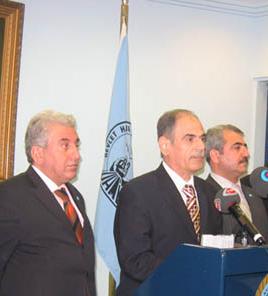
(Turkish Daily News Via Thomson Dialog NewsEdge)The fate of Iraq's disputed city of Kirkuk should be determined in a vote across Iraq rather than in a referendum only in Kirkuk as planned now, simply because the referendum results would not be reliable, an Iraqi Turkmen official in Ankara said
Monday, January 02, 2006
Kurds flock to Kirkuk, claiming land and oil
"Clearly, for the Kurds, Kirkuk is a strategic prize," said Col. David Gray, commander of the 1st Brigade of the 101st Airborne Division, charged with securing the province. "They feel very strongly about bringing their people to Kirkuk to right the wrong that was done under Saddam's regime and the Arabization program. That does collide, of course, with the other groups in the province." Arabs and Turkmens argue that many of the Kurds moving in were not displaced by Saddam -- they originated elsewhere and are settling here to ensure that the province is voted into Kurdistan in 2007.
"The Kurds are building property, houses on land they don't own," said Sangul Chapuk, a Turkmen politician who served on the American-appointed Iraqi Governing Council.
The last accurate census showed that the Turkmens, a Central Asian ethnic group that governed this area under the Ottoman Empire, had a slight majority. That was in 1957. The numbers drastically changed under Saddam's decades-long program of ethnic displacement and further shifted after the American invasion. Capt. Greg Ford, 1st Brigade's intelligence officer, estimated that 85,000 to 350,000 Kurds had moved into the Kirkuk region since spring 2003.
Friday, December 30, 2005
TURKEY, IRAQ AND THE KURDS
By Tulin Daloglu
November 1, 2005
washington times
When President Bush welcomed President Massoud Barzani of the Kurdistan Regional Government of Iraq to the Oval Office last Tuesday, the Turkish Foreign Ministry asked why he was being called "president." If one needs to put words in U.S. officials' mouth, they would say, "Turks are unpleasantly missing the point when it comes to the onus of our relations with the Kurds."
Robert S. Deutsch, the deputy senior adviser on Iraq to the secretary of state, explained at an exclusive briefing for the Turkish journalists that the title is granted to Mr. Barzani by the Iraqi constitution, and it doesn't present a threat to Iraq's territorial integrity and national unity. Still, practically, when Turks look at America as an example of a federal state, they see only one president to be welcomed abroad.As in Plato's "Allegory of the Cave," there is a strict contradiction between the reality and the truth as it appears today. What is real is that America is fighting against global terrorism, and Iraq is a needed front in that war. But fighting terrorism in Iraq was never meant to break up the country or create a Kurdistan that would threaten Turkey's territorial integrity.
The truth as it appears today is that Sunnis and Shi'ites are clashing for the first time since the war in Iraq began — which heightens anxiety about the possibility of a civil war. The insurgency continues. Iraqis still do not have security. And the Kurds are trying to maximize their gains and extend the borders of an autonomous Kurdistan.
The Washington Post reports that Iraqi Kurdish leaders are paying Kurds to resettle in Kirkuk for the expected 2007 referendum, which will define the city's region. Kirkuk is oil-rich, which would guarantee the Kurds enough wealth to survive independently. According to The Post, Lt. Col. Anthony Wickham said, "Does that bring greater stability to Kirkuk? No. It brings pandemonium."
Which is exactly the point. The Kurds are thinking more of their own welfare than that of Iraq as a whole. In addition, Kurds' reluctance to fight a terrorist Kurdish separatist organization — the PKK — confuses the situation, particularly in Turkey.
"We were accustomed to viewing them as tribal leaders," Gen. Hilmi Ozkok, the Turkish chief of general staff, said last Friday. "Now, Talabani is the President. Barzani is in another position. We have to accept the changes. If Jalal Talabani comes to Turkey tomorrow, he will come as a head of state."
Alas, Turkey has supported the political process in Iraq; more than 300 Iraqis — Kurds, Sunnis and Shi'ites — have been trained about building democratic institutions in the parliament and other state bodies. Clearly, Turkey's contributions in creating a united and democratic Iraq distinguish it from Syria and Iran.
Turkey is asking the United States to deal with the PKK in Northern Iraq simply because it asks for a reality statement. The PKK is a terrorist organization, according to the State Department's terrorism report, which wants to create an independent Kurdistan with land from the southeast and eastern parts of Turkey.
Kurds in Iran and Syria closely watch the Iraqi Kurds' experience with the United States. It echoes the worries among Turks whether the United States and Europe really believe the PKK is a terrorist organization.
Today's Turkey has begun the process of joining the European Union, and its improving democracy and human-rights record means its Kurdish citizens will benefit. But if Iraqi Kurdish leaders continue to shy away from acting against PKK terrorism, the people will once again suffer. They must state clearly that the PKK is not a human-rights group, and that Kurds can claim their rights peacefully and democratically.
Iraqi Kurds have fought alongside Turkish troops against the PKK in Northern Iraq before. If Iraqi Kurds hesitate to fight PKK terrorists, who kill Turkish citizens because they don't want to act against their fellow Kurds, how can Muslims be asked to fight radical Islamists like al Qaeda? Iraqi Kurds should assure Turkey that terrorism will not be part of the Kurdish quest for rights, and Turkey, the only democratic nation in the neighborhood, should protect them as it did during the first gulf war. The Turkish Parliament allowed U.S. jets to patrol the northern no-fly zone to protect Kurds from Saddam Hussein.
There is more friendship between the Kurds and the Turks than the animosity that clouds it. It is time that America sheds light on that friendship by acting against the PKK.
Tulin Daloglu is the Washington correspondent and columnist for Turkey's Star TV and newspaper. A former BBC reporter, she writes occasionally for The Washington Times.
Friday, December 23, 2005
Various private armies still exist, threatening Iraq's national
... San Francisco Chronicle - CA, USA
... He also claimed the troops did not respect their brigade commander, Col. Bashar Hussein, an ethnic Turkoman from the northern city of Kirkuk. ...
... He also claimed the troops did not respect their brigade commander, Col. Bashar Hussein, an ethnic Turkoman from the northern city of Kirkuk. ...
The ultimate quagmire
[ATimes]
... continue, not even making headlines - explosions at police stations, assassinationsof "Baghdad officials", executions of collaborators, mortars over the Green Zone,scores of innocent civilian victims of car bombings, Marines killed in the Sunnitriangle, Shi'ite death squads, Turkmen fighting Kurd for Kirkuk ... ...
... continue, not even making headlines - explosions at police stations, assassinationsof "Baghdad officials", executions of collaborators, mortars over the Green Zone,scores of innocent civilian victims of car bombings, Marines killed in the Sunnitriangle, Shi'ite death squads, Turkmen fighting Kurd for Kirkuk ... ...
The resistance will go on
Al-Ahram Weekly - Cairo,Egypt
... results, the Sunni lists -- particularly list number 618 of the IAF -- was not sectarian- based; that it included Kurdish, Shia and Turkoman candidates who ...
... results, the Sunni lists -- particularly list number 618 of the IAF -- was not sectarian- based; that it included Kurdish, Shia and Turkoman candidates who ...
Sunni leaders challenge the validity of ballot
Financial Times - London,England,UK
... In the mixed-ethnic province of Kirkuk, a Kurdish alliance took 52 per cent of the vote followed by Sunni and Turkoman coalitions with 14 and 12 per cent ...
... In the mixed-ethnic province of Kirkuk, a Kurdish alliance took 52 per cent of the vote followed by Sunni and Turkoman coalitions with 14 and 12 per cent ...
Life in Kerkuk Getting Hard

[NEWS IMPRESSION]
Zaman Online - Istanbul,
TurkeyKerkuk (Kirkuk), the fourth biggest province of Iraq, has become the most wretched town in the North of the country though it sits on rich oil reserves. ...
Israeli-Turkish Relations in Crisis
Media Monitors Network - CA,USA
... the Turks used to show little interest in the developments in Iraq, but now ... including the oil-rich Kirkuk region, populated by an important Turkmen community. ...
... the Turks used to show little interest in the developments in Iraq, but now ... including the oil-rich Kirkuk region, populated by an important Turkmen community. ...
EU Commission on a mission to protect the Assyrians and Turkmen of Iraq
Assyria Times - CA,USA
... On the specific situation of the small communities living in Iraq such as the Christian, Assyrian and Turkmen, the need to ensure that all ethnicities ...
... On the specific situation of the small communities living in Iraq such as the Christian, Assyrian and Turkmen, the need to ensure that all ethnicities ...
Wednesday, December 21, 2005
We vote, then we throw you out
Atimesonline
By Pepe Escobar
FIRST, a quick look at the environment ahead of Thursday’s elections in Iraq. Political assassinations, party headquarters burned, abductions (all largely unreported by Western corporate media). A former prime minister, Iyad Allawi — widely known in Baghdad as “Saddam without a moustache” — saying on the record that human rights in President George W Bush’s Iraq are worse than they were under Saddam. Current Prime Minister Ibrahim Jaafari’s Da’wa Party accusing Allawi of defending the occupiers. Allawi accusing Jaafari’s government of corruption. Former Pentagon asset Ahmad Chalabi’s campaign posters with the inscription, “We liberated Iraq.”
Tuesday, December 20, 2005

Election complaints in Iraq
Daily Journal - Caracas,Venezuela... Al-Sadr, whose militia has twice fought US forces in southern Iraq, had reluctantly ... Saad Arkij, head of an ethnic Turkmen slate in the north, complained that ... continue
The US should set a withdrawal deadline
International Herald Tribune - France... The American experiment in Iraq unfortunately has accelerated the re-tribalization ... tribe or ethnic group - Sunni, Shiite, Christian, Kurdish, Turkmen - as the ... continue
Monday, December 19, 2005
Attack On Turkmen Front Offices

19 Dec 2005 15:23:50 GMTSource: Reuters
KIRKUK - Gunmen attacked offices of the Turkmen Front on Sunday in the northern city of Kirkuk. A guard was killed and three others wounded, a spokesman for the party said.
Suspected Vote Crisis Expects Kerkuk

By Ercan Gun Published: Saturday, December 17, 2005 zaman.com
The Kurdish Alliance leads a clear victory in Kerkuk (Kirkuk) after the elections which were held in a high tension atmosphere due to the last minute approval of suspected Kurdish Votes in Kirkuk.
Kerkuk on Tenterhooks After Demographic Change
By Ercan Gun Published: Sunday, December 18, 2005 zaman.com
Kurds, who changed the demographic structure of Kerkuk (Kirkuk) before the Iraqi elections via migrations outside Kirkuk, came out as the first party in the Iraqi parliamentary elections.
Kurds, who changed the demographic structure of Kerkuk (Kirkuk) before the Iraqi elections via migrations outside Kirkuk, came out as the first party in the Iraqi parliamentary elections.
Kurdish frauds
By Mofak Salman
Photos showing Kurdish frauds have been reported at the voting center in Turkmen City of Altunkoperi, Iraq, where Kurds from North of Iraq were casting their votes. The ink that was used could easily be washed off with some chlorine (bleach). The above photos show Kurdish voters were caught red handed in Altunkoperi, Iraq.
According to the ministry of the commerce the number of the Kurds who were deported from Kerkuk under the Arabization policy by the previous regime was 11,685. However, after the occupation of Kerkuk by the Kurdish militias, the number of the Kurds brought by the both Kurdish parties from outside of Kerkuk city and surrounding area has exceeded 300,000 Kurds.
However during the election on the January 2005. The Independent Electoral commission in Iraq Mr. Yahya Alasi had objected on the participation of illegitimate of 72,000 Kurds whom were illegally being added to the list of the eligible voters by the both Kurdish parties.
Instead of the fulfilment of the above request by the Mr.Yahya Alasi for the removal of the 72,000 illegitimate Kurds the commission has removed Mr.Yahya Alasi from his position forcibly because of the both Kurdish parties insistence.
Moreover, the visits of Deputy of US foreigner minister A. Richard to Iraq 2005 showed the green line and the encouragement to the both Kurdish parties to add the name of 108,000 illegitimate Kurdish voters name to the voting list; this caused an outraged among the Iraqi Turkmen
The Independent Electoral commission for the monitoring the election for the Iraqi parliament members from 13th to the 15th of December, 2005 has discovered a wide range of irregularities carried out by the both Kurdish parties by added 81,000 illegitimate Kurdish names in to the voting list in Kerkuk and surrounding areas by providing them with forgery documents in order to qualified them for the election.
We the Turkmen of Iraq are calling upon the US ambassador Zalmay Khalilzad and UN representative for Iraq Mr Ishraf Kazi to make sure the removal of the 81,000 illegitimate voters by the election committee whom forcibly inserted to the election list is valid and they should adhere to their decision.
Moreover, the removal of 81,000 unqualified Kurdish voters by using forged document that was provided to them by both Kurdish parties and according to the document numbers 614 /617, dated on the 9/12/2005 and 10/12/2005 accordingly that was released should not been allowed to vote, otherwise allowing these illegal voters to vote is unfair and would be a blow against democracy, and breach of the election rule.
It is shocking to see that the Independent Electoral commission for the monitoring the election for the Iraqi parliament members has deviated from its decision and allowed the illegitimate Kurdish voters to vote. It is utterly unacceptable to see that the independent electoral commission has bowed to the Kurdish pressure.
This clearly indicates that the independent commission is incapable and incompetent in fulfilling its duty. Also the Turkmen of Iraq has completely lost trust in the above commission; therefore we are calling on the UN representative in Iraq for urgent need for establishing independent committee to discuss the above changing.
According to the ministry of the commerce the number of the Kurds who were deported from Kerkuk under the Arabization policy by the previous regime was 11,685. However, after the occupation of Kerkuk by the Kurdish militias, the number of the Kurds brought by the both Kurdish parties from outside of Kerkuk city and surrounding area has exceeded 300,000 Kurds.
However during the election on the January 2005. The Independent Electoral commission in Iraq Mr. Yahya Alasi had objected on the participation of illegitimate of 72,000 Kurds whom were illegally being added to the list of the eligible voters by the both Kurdish parties.
Instead of the fulfilment of the above request by the Mr.Yahya Alasi for the removal of the 72,000 illegitimate Kurds the commission has removed Mr.Yahya Alasi from his position forcibly because of the both Kurdish parties insistence.
Moreover, the visits of Deputy of US foreigner minister A. Richard to Iraq 2005 showed the green line and the encouragement to the both Kurdish parties to add the name of 108,000 illegitimate Kurdish voters name to the voting list; this caused an outraged among the Iraqi Turkmen
The Independent Electoral commission for the monitoring the election for the Iraqi parliament members from 13th to the 15th of December, 2005 has discovered a wide range of irregularities carried out by the both Kurdish parties by added 81,000 illegitimate Kurdish names in to the voting list in Kerkuk and surrounding areas by providing them with forgery documents in order to qualified them for the election.
We the Turkmen of Iraq are calling upon the US ambassador Zalmay Khalilzad and UN representative for Iraq Mr Ishraf Kazi to make sure the removal of the 81,000 illegitimate voters by the election committee whom forcibly inserted to the election list is valid and they should adhere to their decision.
Moreover, the removal of 81,000 unqualified Kurdish voters by using forged document that was provided to them by both Kurdish parties and according to the document numbers 614 /617, dated on the 9/12/2005 and 10/12/2005 accordingly that was released should not been allowed to vote, otherwise allowing these illegal voters to vote is unfair and would be a blow against democracy, and breach of the election rule.
It is shocking to see that the Independent Electoral commission for the monitoring the election for the Iraqi parliament members has deviated from its decision and allowed the illegitimate Kurdish voters to vote. It is utterly unacceptable to see that the independent electoral commission has bowed to the Kurdish pressure.
This clearly indicates that the independent commission is incapable and incompetent in fulfilling its duty. Also the Turkmen of Iraq has completely lost trust in the above commission; therefore we are calling on the UN representative in Iraq for urgent need for establishing independent committee to discuss the above changing.
Sunday, December 18, 2005
Iraqi Parties Complain of Vote Irregularities
Washington Post - United States... Saad Arkij, head of an ethnic Turkmen slate in the north, complained that members of his minority and Arabs were barred from voting in Kirkuk, a northern city claimed by Arabs, Turkmens and Kurds. He blamed the Kurds. "Even policemen, when they went to the headquarters to vote, were told the ballots were all gone," he said. "It was unbelievable."......C
Subscribe to:
Comments (Atom)